Acoustic Design Guide 2026
Acoustic design enhances comfort, communication, and productivity by managing sound through absorption, insulation, and diffusion. Strategic use of materials, smart technologies, and early planning prevents reverberation and disruptive noise in homes, offices, and public spaces. Innovative solutions and collaboration with acoustic specialists create aesthetic and functional environments in which sound is optimally regulated.

An introduction to acoustic design
Acoustic design is the process of planning and shaping the acoustic environment of a space so that sound behaves in a controlled and comfortable way. It considers factors such as sound absorption, sound insulation, sound reflection, sound diffusion and reverberation.
Whether you're designing a home, office, restaurant or public space, the way sound moves through a room has a significant impact on comfort, communication and functionality.
Effective acoustic design combines materials, spatial planning and acoustic strategies to control unwanted noise while supporting the way a space is intended to be used. When acoustic considerations are integrated early into the design process, the result can be both visually appealing and acoustically comfortable.
Why acoustics matter in functional design
Acoustic design has a direct impact on how people experience a space. Poor acoustics can make conversations difficult, increase distractions and reduce comfort, while a well-planned acoustic environment can support communication, concentration and productivity.
Imagine walking into a restaurant where every conversation echoes throughout the room, or an open office where you're constantly distracted by nearby conversations and equipment. These are examples of how acoustics can affect the functionality of a space.
A good acoustic design considers how the room will be used and determines where sound should be absorbed, reflected, diffused or isolated. The result is a space where people can communicate comfortably and carry out their activities without unnecessary acoustic distractions.

Key Principles of Acoustic Design
Effective acoustic design combines several principles to control how sound behaves within a space.
- Sound absorption vs. sound insulation:
It is important to distinguish between sound absorption and sound insulation. Sound absorption reduces reflected sound and reverberation within a room, while sound insulation helps prevent sound from passing between spaces. Both can play an important role in acoustic design, depending on the requirements of the building. - Noise control materials:
Materials such as acoustic panels, mineral wool and other sound-absorbing products can help reduce unwanted reflections and improve the acoustic environment. Their placement on walls, ceilings and other surfaces should be based on the characteristics and use of the space. - Sound reflection and diffusion:
Sound reflection and diffusion can be used strategically to control how sound travels through a room. Reflective surfaces can direct sound, while diffusers scatter sound energy more evenly throughout a space. - Sound diffusion:
Diffusion helps distribute sound waves more evenly and can reduce strong reflections and acoustic hotspots. Diffusers, irregular surfaces and carefully designed geometric elements can contribute to a more balanced acoustic environment. - Controlling reverberation:
Reverberation occurs when sound continues to reflect from surfaces after the original sound has been produced. Excessive reverberation can make speech difficult to understand and reduce acoustic comfort. Acoustic panels and other sound-absorbing materials can help control reverberation.

Acoustic Design in Different Types of Spaces
Every type of building and room has different acoustic requirements. Effective acoustic design in buildings starts with understanding how a space will be used, who will use it and what types of sound are expected.
- Office spaces:
Modern offices, especially open-plan workplaces, can present significant acoustic challenges. Conversations, phone calls, meetings and office equipment can create unwanted background noise and distractions.
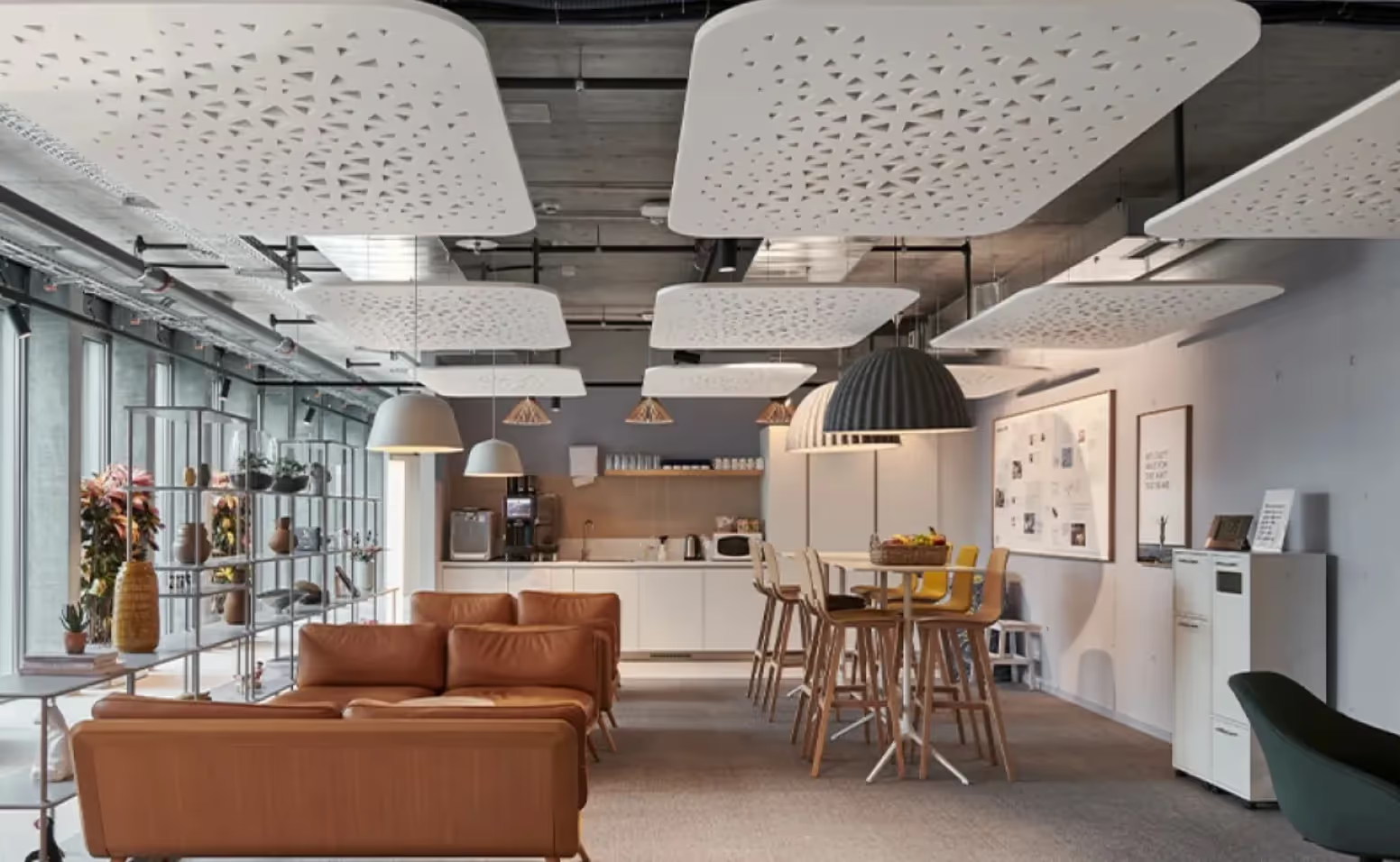
An effective office acoustic design can include acoustic zoning, sound-absorbing materials, acoustic partitions and treatments for walls and ceilings. Quiet areas can be separated from collaborative zones to create a better balance between concentration and communication.

- Public spaces:
Public spaces such as theatres, auditoriums and conference halls require careful acoustic planning to achieve speech intelligibility and sound clarity.
In these environments, acoustic design often involves balancing sound absorption, reflection and diffusion. Acoustic panels, ceiling treatments and other acoustic elements can help distribute sound more evenly throughout the space.

- Living areas:
Residential buildings require acoustic solutions that support privacy, comfort and a pleasant indoor environment. Noise can come from neighbouring rooms, adjacent apartments, traffic and other external sources.
For multi-family homes and high-rise buildings, acoustic design should consider both airborne sound and impact noise. Acoustic insulation between walls, floors and ceilings, together with appropriate windows and floor constructions, can help reduce unwanted sound transmission.

Innovative Acoustic Design Solutions and Technologies
Modern acoustic design solutions combine performance, functionality and aesthetics. New materials, acoustic products and digital technologies make it possible to integrate sound control into a wide range of architectural environments.
- Customizable acoustic panels:
Acoustic wall panels are available in different colours, patterns, shapes and finishes. They can absorb unwanted sound and help control reverberation while becoming an integrated part of the interior design.
- Smart acoustic systems:
Smart acoustic systems are an emerging area within architectural acoustics. These technologies can adapt sound conditions to different activities and room configurations, creating greater flexibility in modern buildings.
- Advanced sound modelling tools:
Acoustic modelling software can predict how sound will behave within a space. These tools can help acoustic designers assess reverberation, sound distribution and areas where acoustic treatment may be required.
Software such as ODEON and CATT-Acoustic can be used to simulate room acoustics and support more accurate acoustic planning during the design process.
Common Acoustic Design Mistakes to Avoid
- Overlooking acoustic planning early in the design process:
One of the most common mistakes is considering acoustics only after the main design has been completed. Retrofitting acoustic treatments can increase costs, limit design options and result in less effective solutions.
Integrating acoustic design during the early planning stages makes it easier to select suitable materials, define acoustic zones and coordinate acoustic requirements with the overall architectural design.
- Choosing the wrong materials:
Not every acoustic material performs in the same way. Choosing a material without considering the specific requirements of the room can result in poor acoustic performance.
For example, a space that requires a combination of sound absorption and diffusion may not benefit from simply adding as much absorption as possible. The right balance depends on the size, function and acoustic characteristics of the room.
- Ignoring acoustic standards and regulations:
Acoustic requirements can vary depending on the type of building and its location. Relevant standards and regulations should therefore be considered as part of the design process.
Standards such as ISO 717 for airborne sound insulation and ISO 354 for sound absorption can be relevant when assessing acoustic performance.

Working with Acoustic Specialists
Working with an acoustic advisor can help ensure that acoustic requirements are considered from the beginning of a project.
An acoustic specialist can assess the space, identify potential acoustic problems and recommend suitable acoustic design solutions based on the intended use of the building.
Integrating acoustics early can help prevent costly changes later and ensure that acoustic treatments work together with the architectural design rather than being added as an afterthought.
Akoesta: Your Partner for Acoustic Design
At Akoesta, we understand that successful acoustic design needs to balance aesthetics, functionality and acoustic performance.
We provide customized acoustic solutions for offices, homes and public spaces, helping architects, designers and businesses create environments where sound is carefully controlled without compromising the visual design.
From acoustic advice and planning to customized acoustic products and installation, we can help integrate acoustic solutions into your project from the early design stage.
Ready to explore the acoustic potential of your project? Get in touch with us to discuss your acoustic requirements.





Share this:

Related posts
Check out these articles...

Test the acoustics at your office yourself with a self-test

Better acoustics, greener Offices: Sustainable solutions

Designing Workspaces for Millennials’ Needs
Transform your environment into the best version to work, learn or live in
Know what options are available for your situation in 30 minutes.