A municipality on the move
Acoustic design for a growing municipality. Where open space and acoustic precision converge
.jpeg)
.jpeg)
.jpeg)
.jpeg)
.jpeg)
.jpeg)
.jpeg)
.jpeg)
.jpeg)


A municipality on the move
Hilversum is one of the most well-known municipalities in the Netherlands. Renowned as the country's media city and home to public broadcasting, creative industries, and a growing administrative body. As the organization expanded, so did its spatial ambitions.
To accommodate this growth, the municipality relocated some of its operations to a large, existing building next to Hilversum Central Station. An excellent location, but one with specific acoustic challenges.
The challenge: designing acoustic comfort for various spaces
The new office layout was ambitious: expansive open-plan office environments designed to foster collaboration, alongside dedicated focus zones and various types of meeting rooms. Each space had a different purpose and required a distinct acoustic approach.
In an environment like this, acoustics cannot be an afterthought. The combination of hard surfaces, high ceilings, and the constant movement of employees creates a soundscape that, without thoughtful intervention, undermines concentration, communication, and the overall quality of the work environment.
The challenge, shared by architect Diederen and construction company Mokveld Bouw en Onderhoud BV, was clear: to design a cohesive interior where acoustic performance and visual harmony are not competing priorities, but a single, combined outcome. Every material choice had to serve both the eye and the ear.
Acoustics as an integral part of the design vision
From the outset, architect Diederen approached this project with a clear conviction: acoustic materials should not be added as an afterthought to a finished interior, but must be woven into the design from the very beginning. His interior concept gave equal weight to spatial aesthetics and acoustic performance. And this was clearly visible in the result.
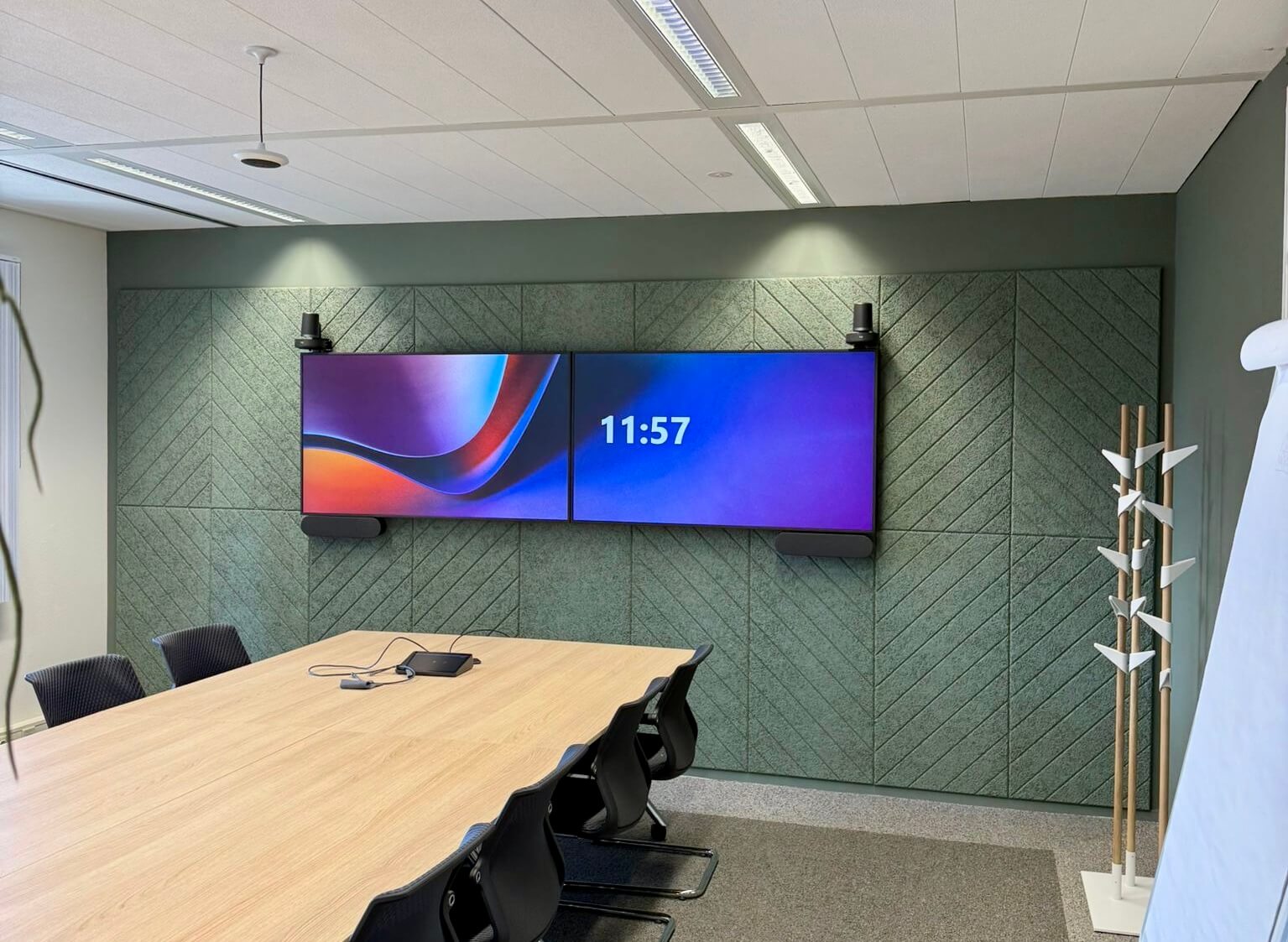
Instead of applying a single solution for the entire building, architect Diederen based his design on the functional character of each zone. Open spaces received treatments tailored for diffusion and absorption at scale. Meeting rooms were equipped with materials that enhance speech intelligibility and privacy. Focus zones required more intimate, targeted interventions. This "room-by-room sensitivity" is what distinguishes thoughtful acoustic design from generic standard solutions.
A carefully curated palette of acoustic materials
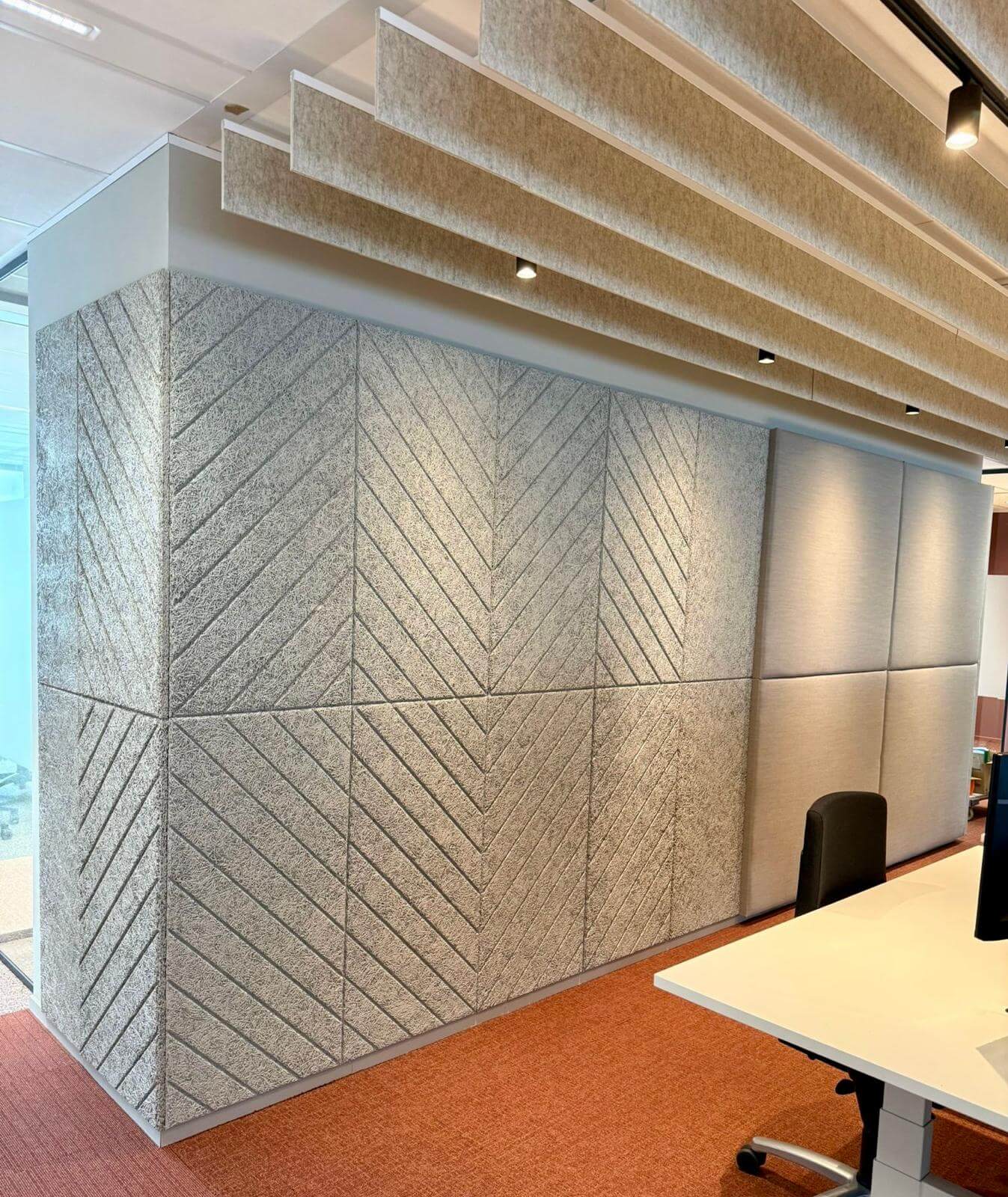
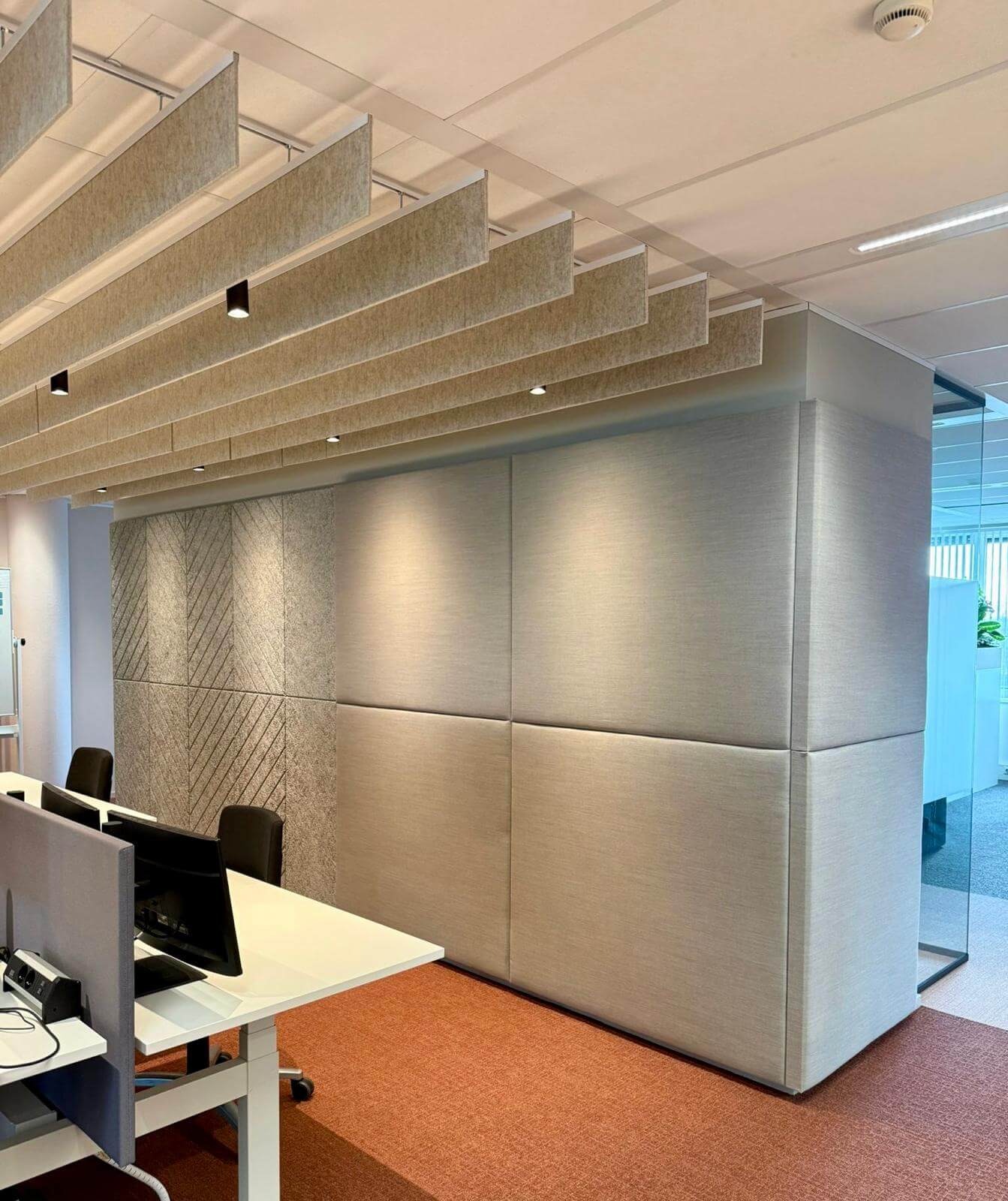
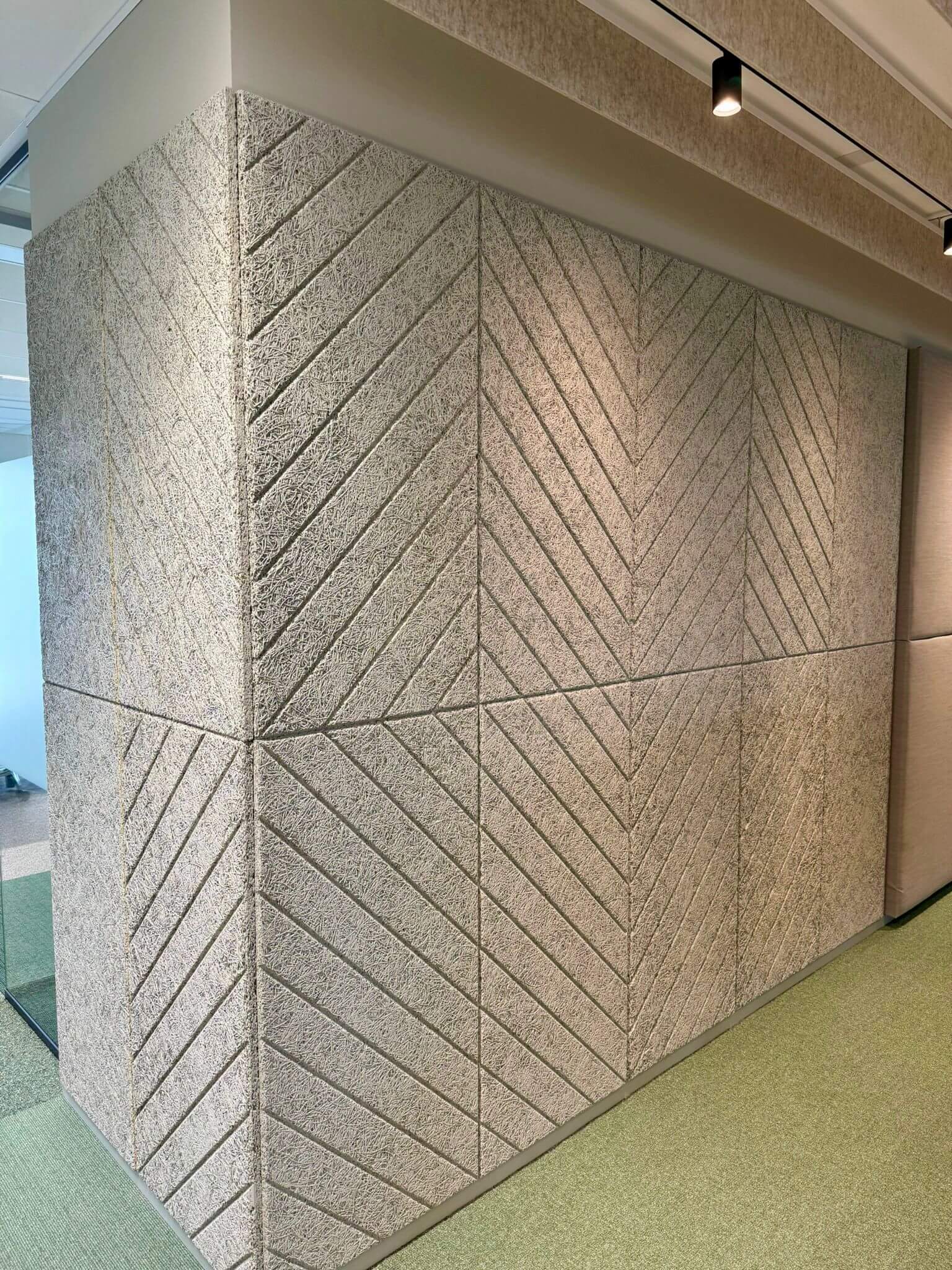
Three carefully selected acoustic wall covering systems were specified and installed in the building. Each chosen based on acoustic properties, material character, and the ability to contribute to a coordinated color palette throughout the space:
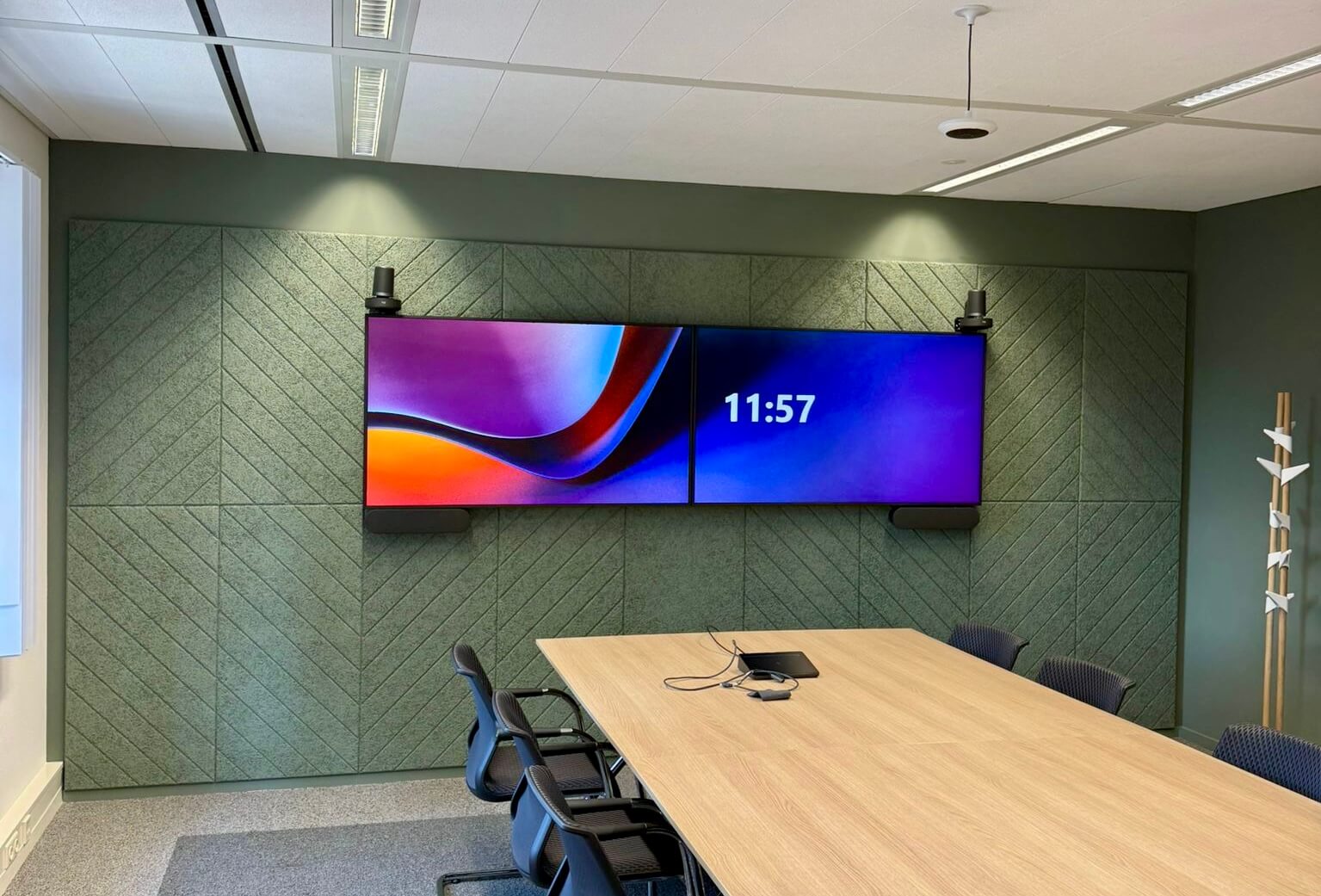
- Mute Fraction wall panels by De Vorm: installed in one carefully chosen color to anchor the visual tone of the main spaces.
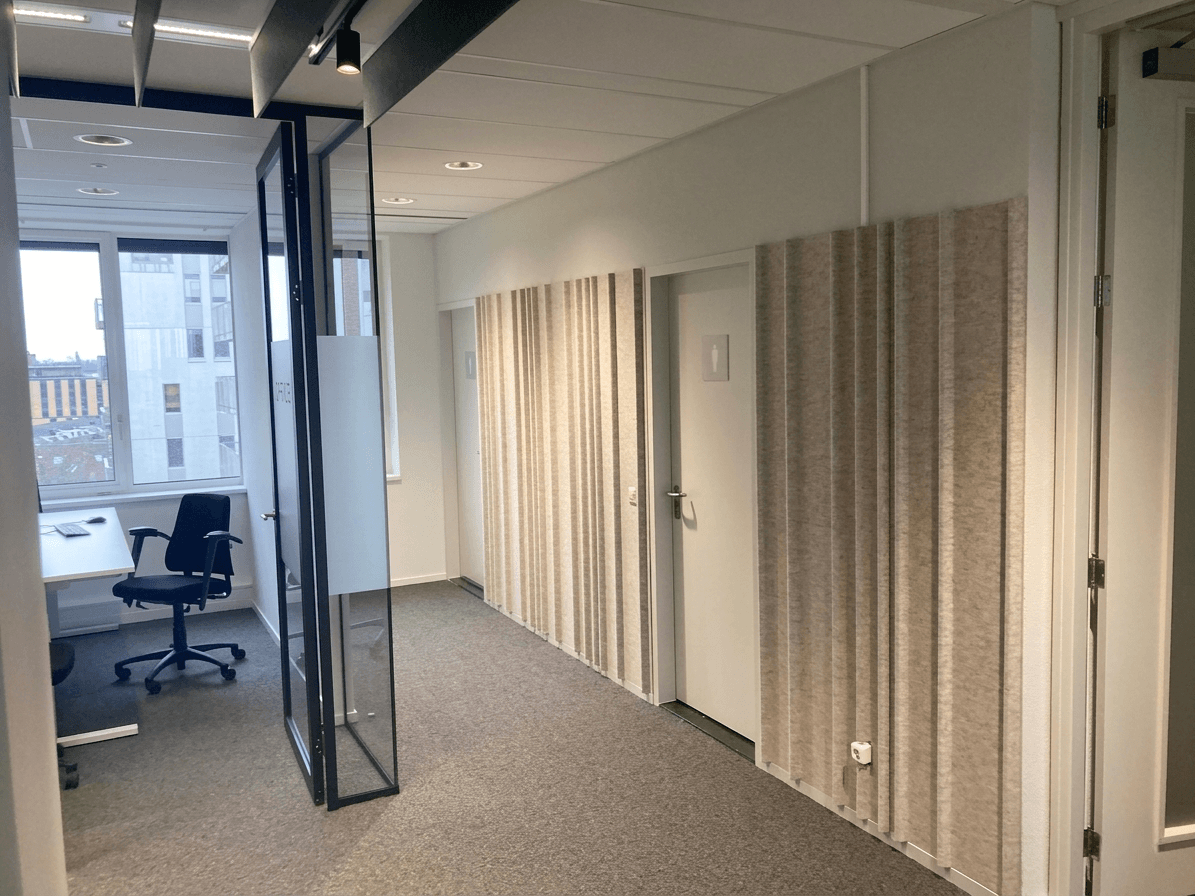
- Wood Wool wall panels by Baux: specified in multiple colors to add texture and warmth, with excellent broadband sound absorption.
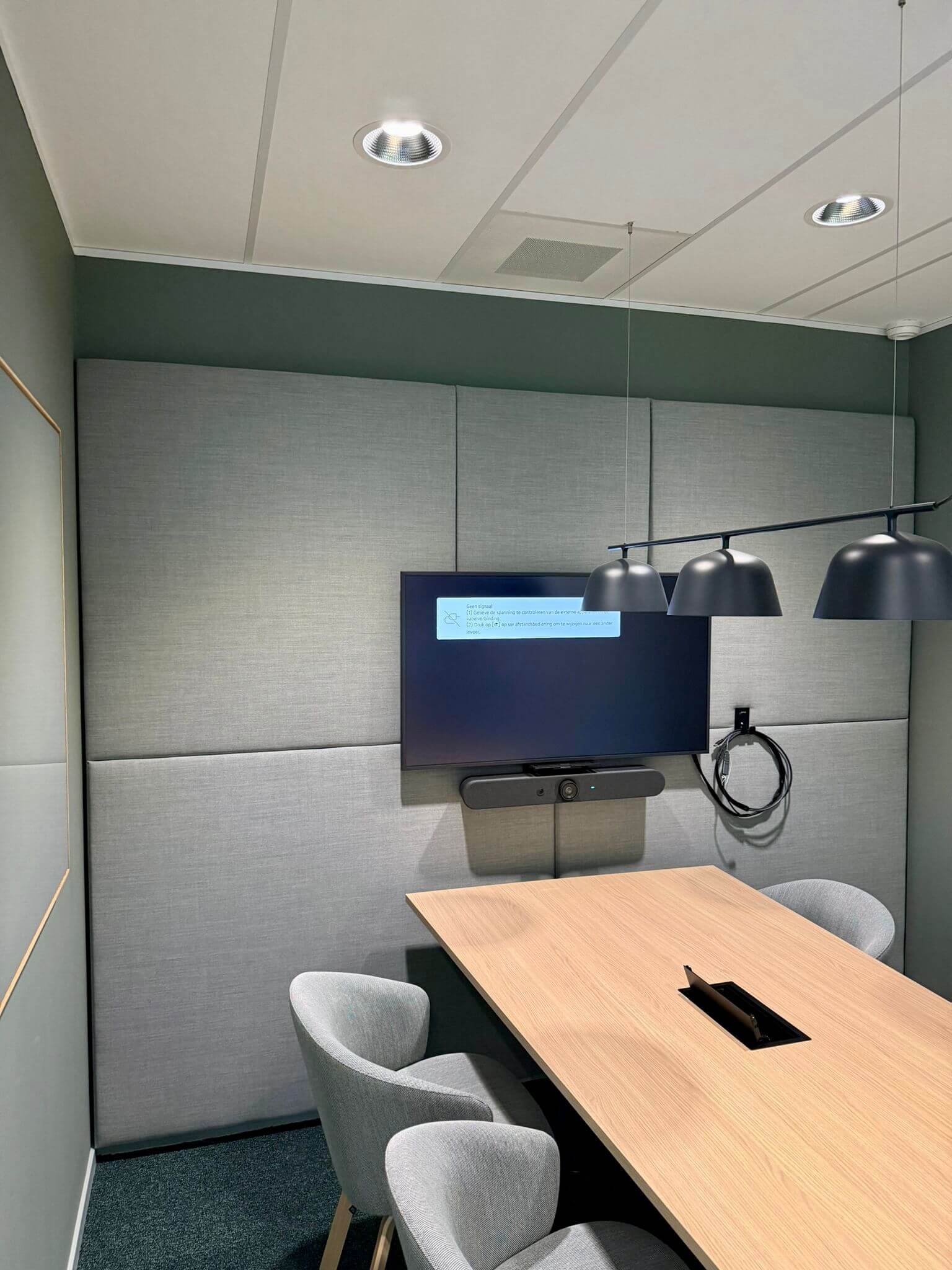
- Akoesta's own upholstered wall panels on hook rails: supplied in a range of colors and custom-made to exact specifications for each individual wall position.
The color palette of all three systems was deliberately coordinated to ensure visual consistency across the zones, while each material could fulfill its specific acoustic function. The result is a building perceived as one cohesive design, not a patchwork of interventions.
Precision manufacturing and installation
For the Mute Fraction and Wood Wool panels, on-site finishing and fitting ensured a perfect finish at every joint. The upholstered Akoesta panels required a more precise approach: each panel position was individually measured on-site, taking into account the exact locations of power outlets, screens, and desk surfaces; variables that standard panels cannot accommodate.
These measurements were then taken to Akoesta's workshop, where each panel was custom-made to fit its specific position precisely. This level of craftsmanship meant that the installation proceeded quickly and without compromise.
The hook-rail system further accelerated the installation process: panels could be placed quickly and securely without the complexity of traditional mounting methods. Combined with a deliberate planning strategy (with the majority of the work carried out on Fridays and Saturdays), disruption to the municipality's daily operations was kept to an absolute minimum.
Collaboration and partnership
Akoesta worked on this project as the specialist subcontractor for Mokveld Bouw en Onderhoud BV, the construction company responsible for the renovation of the part of the building leased by the municipality. This collaborative structure allowed our acoustic expertise to be fully integrated into the broader construction program, with clear coordination between design intent, on-site execution, and final delivery.
A direct and noticeable difference
The impact of the acoustic solutions was already noticeable before the project was completed. As panels were installed room by room, employees working in the building provided feedback on the change. They observed how each space felt more pleasant and functional as more materials were put in place. This kind of direct, felt response speaks volumes about the quality of both the design and the execution.
The completed building meets all dimensions of architect Diederen's original vision. Acoustically, the different zones now function in a way that suits their intended use: open spaces feel lively but not overwhelming; meeting rooms support clear, focused discussions; and individual workstations offer the tranquility required for sustained concentration.
Visually, the coordinated material palette unifies the building. The Mute Fraction, Wood Wool, and upholstered Akoesta panels appear not as acoustic additions, but as deliberate design choices, contributing on their own merits to the aesthetic quality of the space.
Acoustics and design. Not a trade-off, but a partnership
This project is a clear demonstration of what becomes possible when acoustic considerations are woven into the design process from the outset, rather than being added as an afterthought. Architect Diederen's approach treated acoustic materials as design materials, and the result is a work environment that is both beautiful and genuinely functional.
For the Municipality of Hilversum, the result is a modern, people-centric office that supports the well-being and productivity of its employees. For Akoesta, it is another example of what precision manufacturing, intelligent material selection, and close collaboration with a skilled design team can achieve.
The 3 big ones
takeaways
1. Acoustics belong in the design brief, not the finishing phase
Architect Diederen considered acoustic materials as design materials from day one, and the result shows it. When acoustics are part of the brief from the outset, they are no longer a limitation, but an opportunity.
2. One space, one solution is never enough
Open spaces, concentration zones, and meeting rooms each have different acoustic needs. The Hilversum project was a success because each zone was assessed on its own merits, rather than with a generic, uniform approach.
3. Manufacturing precision makes the difference between good and perfect
Each Akoesta panel was custom-measured on-site and manufactured in the workshop to fit its exact position. This level of preparation ensures a seamless installation and a truly uncompromising final result.
How are the acoustics in your building?
Many workplaces in the Netherlands do not comply with the noise standard. Users often don't know how bad the acoustics are because they've gotten used to it. This often results in (physical) complaints such as headache, stress and concentration problems. One good acoustics can prevent this. The specialists at Akoesta are happy to help you with personal advice and, if necessary, with an acoustic measurement.
Get in touch