Architectural Soundscape: From Acoustic Control to Sensory Design
Architectural soundscape represents a fundamental shift from merely controlling sound to designing meaningful acoustic environments that determine how people experience space. Learn the principles, strategies, and emerging technologies that help architects create spaces where sound enhances functionality as well as ambiance.
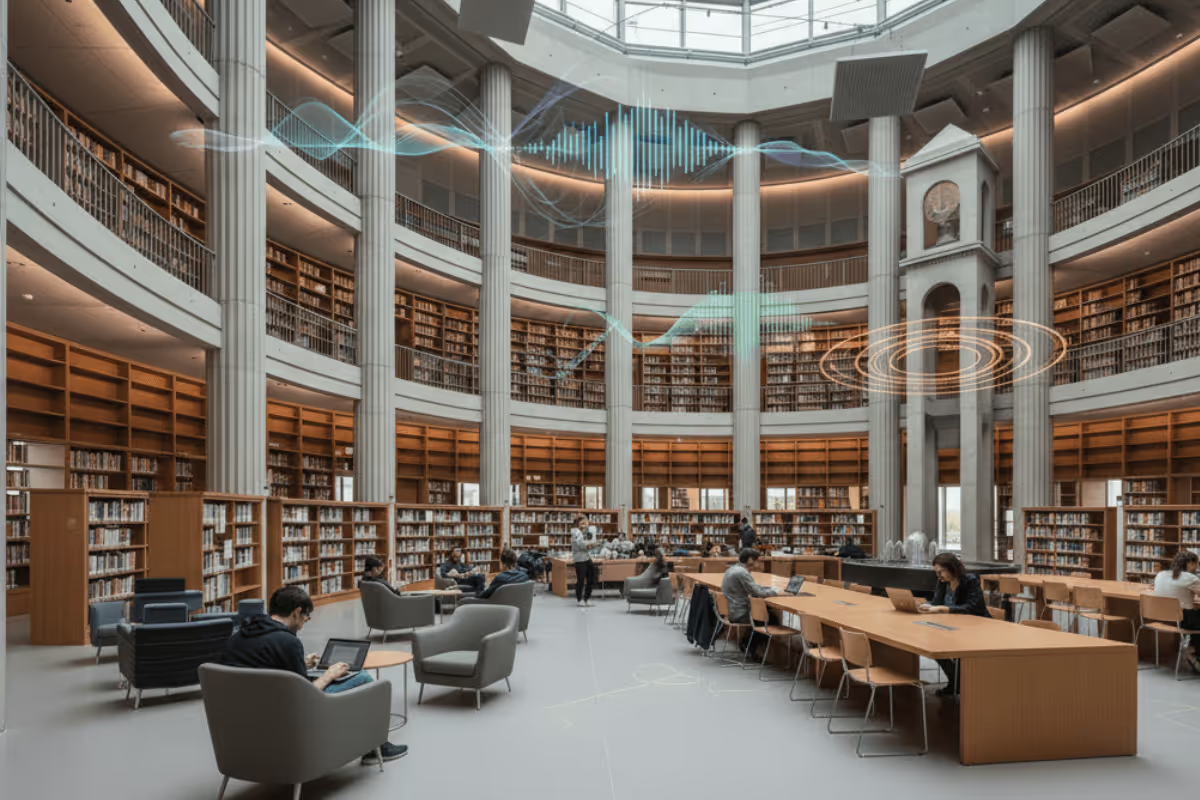
When we think of architecture, our thoughts usually focus on the visual: shapes, materials, light, and shadow. Yet there is an entire dimension of spatial experience that often remains invisible in design discussions. Until it becomes impossible to ignore them. Sound determines just as much how we feel in a room like what we see: the architectural soundscape is a critical factor in creating environments that actually work.
For design professionals, understanding and consciously designing the acoustic environment has become a must these days. From open offices where voice privacy and collaborative energy come together, to healthcare institutions where silence promotes the healing process, the sound environment you design has a direct impact on the well-being, productivity, and overall success of your project.
This article explores the changing paradigm of architectural sound, which is moving from mere noise control to a holistic sound environment design that enhances the human experience.

From Building Acoustics to Architectural Soundscape Design
The relationship between architecture and sound has undergone a fundamental change in recent decades, with the emphasis moving from a purely technical discipline to a people-centered design approach.
The traditional approach: building acoustics
Building acoustics, with which Wallace Clement Sabine pioneered in the early 20th century, it grew out of empirical sciences and physics. In this approach, noise is treated as a physical phenomenon that can be measured and controlled. The focus is on quantitative parameters such as reverberation time, sound pressure levels and absorption coefficients.
While this technical basis is still valuable, it only addresses one dimension of how people experience sound in built environments. The goal here is noise control: managing behavior through calculations and measurements.
The Contemporary Paradigm: Soundscape
The soundscape approach, formalized by ISO standards, defines the acoustic environment as “the acoustic environment as perceived or experienced and/or understood by a person or persons, in context”. This definition marks a crucial evolution.
Rather than treating sounds as problems that need to be eliminated, the soundscape approach acknowledges them as sources that can enrich the spatial experience. The focus shifts from controlling the physical properties of sound to understanding the mutual effects of sound on people, cognitively, emotionally and psychologically.
The goal changes from noise control unto sound design, striving for greater harmony through conscious intervention. This people-centered approach takes into account the context, meaning, and subjective experience of the listener.
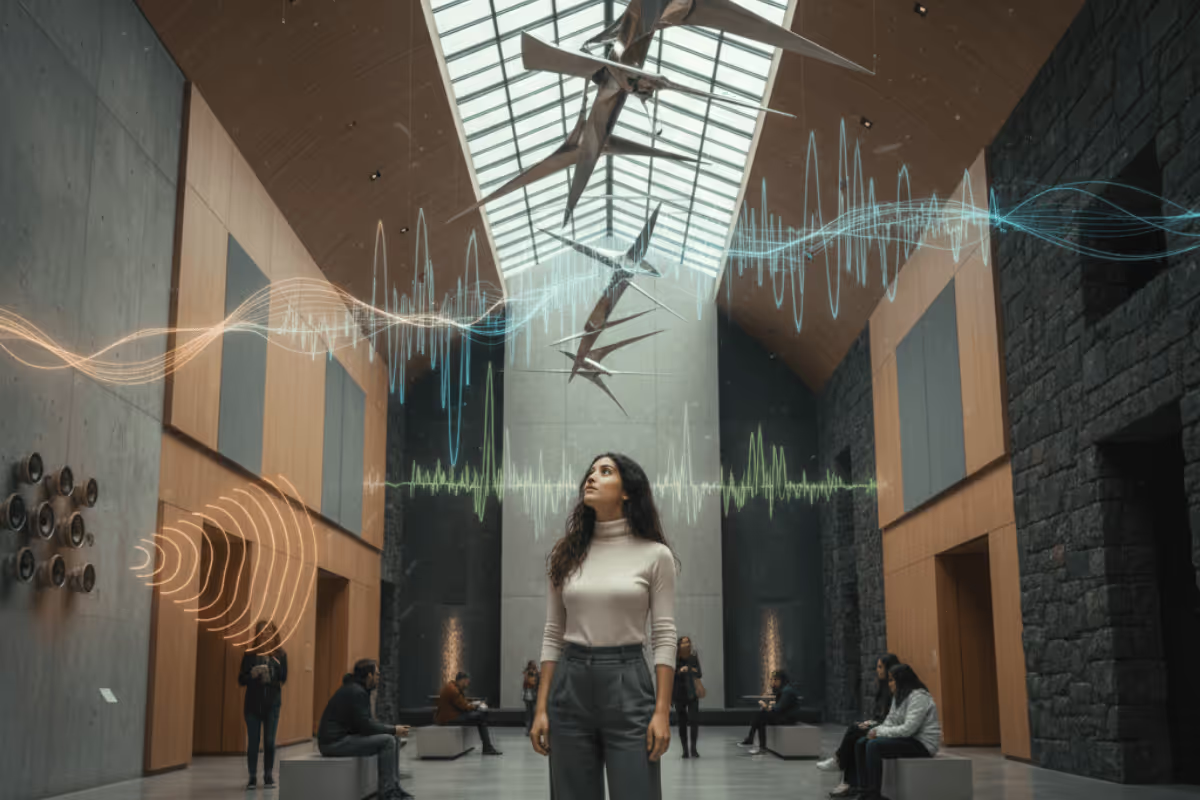
Key Concepts in Architectural Soundscape Design
To design effective soundscapes, we need a common language. Several key concepts help us understand how sound works within architectural environments.
Keynotes, signals, and soundmarks
Based on acoustic ecology and the work of R. Murray Schafer ambient sounds can be divided into three fundamental types:
-1- Keynotes are the persistent background sounds that form the main basis for the character of a sonic environment. They are often heard unconsciously and can include the hum of HVAC systems, distant traffic, or environmental sounds of nature. These sounds form the basis for the acoustic atmosphere.
-2- Signals have an informative function; they are sounds that we actively listen to and respond to. Think of alarms, doorbells, public address systems or the sound of an upcoming elevator. These sounds have a functional meaning.
-3- Soundmarks are distinctive sounds that are specific and distinctive to a location or community; the auditory equivalent of visual landmarks. The reverberation of footsteps in a cathedral, church bells in a European square, or the acoustic nature of a particular concert hall all serve as soundmarks that give places their unique acoustic identity.
Auditory spatial awareness
Humans have a remarkable ability to perceive spatial features (dimensions, shapes and materials) by listening to sound reflections. this auditory spatial awareness forms the basis of what is called “auditory architecture”.
When you walk into a large room instead of a small room, you'll immediately feel the difference, even with your eyes closed. The way sound bounces off surfaces, the time it takes for echoes to return, and the quality of those reflections all transmit spatial information. A well thought-out design can enhance this natural ability of humans, making spaces more readable and comfortable due to their acoustic character.
Acoustic atmospheres
Perhaps nothing illustrates the power of sound better than acoustic atmospheres: the ever-changing or constant sound qualities that have a profound effect on how we experience space. A reverberating reflection in a cathedral creates transcendence and awe. The silent absorption of a library invites contemplation. The vibrant acoustic energy of a restaurant exudes vibrancy and social connection.
These spheres can have just as much, or sometimes even more, influence how people feel in a space than the architecture itself. Creating the right acoustic atmospheres ensures that your design is a success.
.avif)
How Architectural Soundscapes Affect Human Experience
In addition to the technical parameters, understanding how sound affects people remains at the heart of effective design.
Health, wellbeing and performance
Excessive noise exposure leads to stress, mental fatigue, and decreased productivity. Conversely, well-designed acoustic environments promote concentration, relaxation, and healing. Research consistently shows that acoustic comfort has a direct influence on:
- Cognitive performance: speech intelligibility, concentration and information retention.
- Emotional wellbeing: stress levels, sense of privacy, and psychological comfort.
- Physical health: sleep quality, recovery rate in healthcare environments and cardiovascular stress.
The sound experience is also inherently multi-sensory. Audiovisual interactions, sound-temperature relationships, and other cross-modal effects determine how people perceive and respond to spaces.
Cultural and contextual significance
Acoustic preferences are highly contextual and culturally determined. In Japanese architecture, priority is often given to silence and subdued ambient sounds, reflecting values such as mindfulness and restraint. At Italian restaurants, overlapping conversations and lively social sounds are quite normal. Modern open offices try to find a balance between the energy of collaboration and zones where people can retreat acoustically.
Understanding your specific users and context is essential. In residential buildings, comfort, content, and privacy/control are the most important perceptual dimensions of the indoor soundscape. Each type of space requires its own acoustic strategy that is tailored to how people will use and experience this space.

Practical design strategies and techniques
Architects have always consciously or unconsciously shaped sound through material choices and spatial geometry. Insight into these tools enables a more targeted and effective acoustic design.
For an in-depth exploration of practical strategies for designing soundscapes, we recommend you check out our accompanying article on the Designing Sound Landscapes to read, which provides detailed guidelines for implementation techniques and case studies.
Material choices: absorption and reflection
Sound absorbing materials reduce unwanted ambient noise, limit sound transmission between rooms, and minimize reverberations and echoes that can make spaces harsh or uncomfortable. These materials work by capturing sound waves in their fibrous or porous structures, causing acoustic energy to be removed in the form of micromovements and heat. Modern acoustic solutions include rockwool, PET felt and innovative natural materials such as wood wool, mycelium and cotton.
Sound-reflecting surfaces on the other hand, are crucial where high sound quality or speech intelligibility is important. Concert halls, lecture halls, meeting rooms, and stages require hard floors, walls, and ceilings that retain and direct, rather than absorb, acoustic energy.
The trick is to find the right balance for your specific program and space.

Geometry, shape, and spatial configuration
The shape and configuration of a space essentially determine the behavior of sound.
In reverberating spaces materials and geometric shapes that reflect sound are used to create a longer reverberation time. Religious and cultural buildings (cathedrals, concert halls, ceremonial spaces) consciously use this feature to evoke a sense of awe, mystery, and transcendence. The monumental scale of the Pantheon in Rome or the massive dome of Hagia Sophia are examples of this approach.
In case of non-orthogonal designs are used to use curved or controlled surfaces (such as hyperbolic paraboloids) to avoid the acoustic problems caused by parallel surfaces in rectangular spaces. Multiple reflections between parallel walls cause flutter echoes and standing waves that cloud sound quality. Strategic geometry solves these problems elegantly.

Strategic integration: the acoustic palette
A simplified framework for interventions in the soundscape includes three complementary strategies:
- Reduce, attenuate, or soften existing noises that are considered to be unwanted or excessive.
- Preserve and strengthen existing sounds that make a positive contribution to the environment.
- Add acoustic elements add that enrich the overall design, such as water features, natural sounds or culturally important acoustic markings.
This palette acknowledges that good acoustic design is not just about elimination, but also about curation and composition.
Contemporary interventions
Modern soundscape design involves the use of several additional techniques:
Acoustic zoning and buffering separate quiet and noisy activities at multiple scales, from the layout of spaces to the mass of buildings and urban planning. The scale of the space becomes a defining parameter for the acoustic experience.
Sound masking introduces a low level of ambient noise (such as calm running water) to increase speech privacy in open environments without creating awkward silence.
Biophilic design integrates nature-inspired sounds (rustling leaves, rippling water, birdsong) to improve the atmosphere and well-being. These elements can also act as natural sound masking.
Hidden sound systems provide for seamless reproduction of ambient sounds via speakers that are integrated into walls, ceilings and furniture, supporting the acoustic atmosphere without visual disturbances.
Interactive sound installations create dynamic auditory environments that respond to users' movements or touches, transforming passive spaces into engaging sensory experiences.
These and other strategies are discussed in detail in our article Designing Sound Landscapes, which offers practical implementation advice.
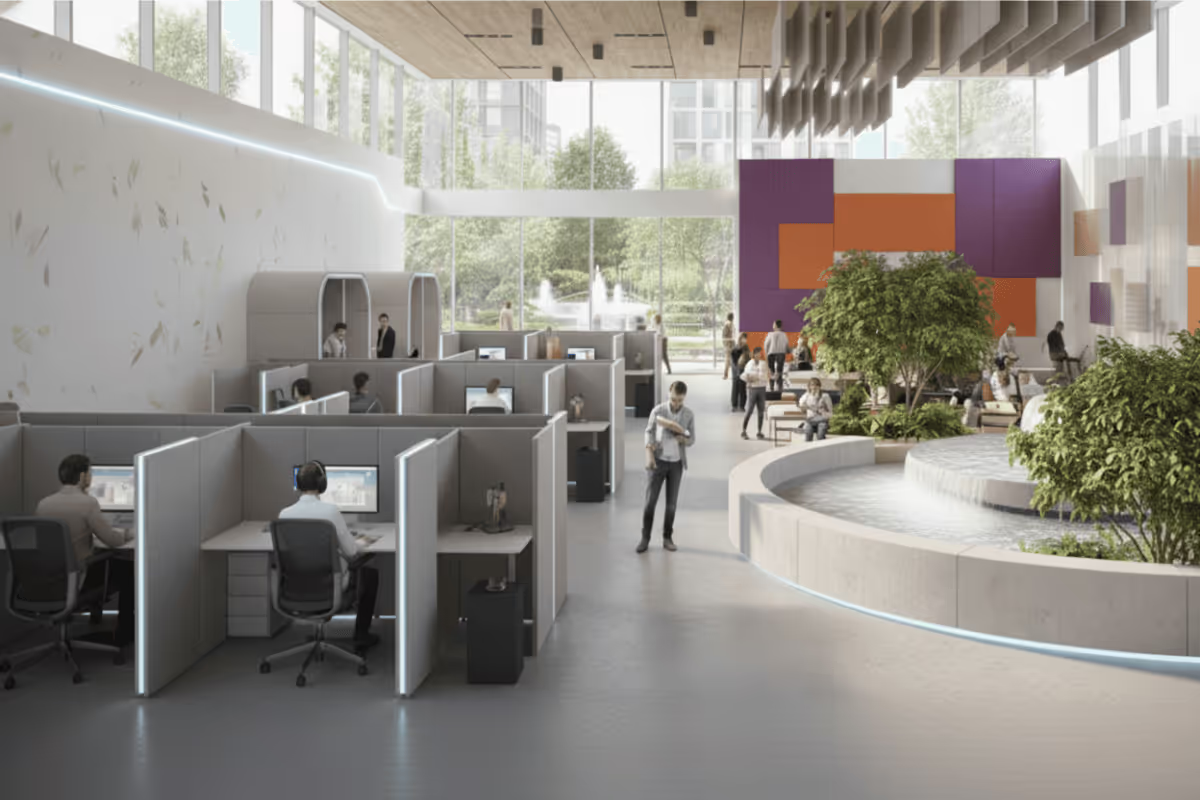
Measurement, standardization and design tools
The field of soundscape now benefits from rigorous standardized methodologies and advanced tools that support evidence-based design.
ISO 12913 framework
The International Organization for Standardization has established a comprehensive framework for assessing the quality of the sound environment in the ISO 12913 series:
- ISO 12913-1:2014 establishes the overall framework and definition, including context, sources of noise, acoustic environment, auditory perception, interpretation, responses, and results.
- ISO/TS 12913-2:2018 provides guidelines for collecting and reporting data, including both subjective assessments and objective measurements.
- ISO/TS 12913-3:2019 describes data analysis methods.
- ISO/TS 12913-4 (under development) will specifically address design and intervention.
Perceptual assessment
The assessment of the soundscape using a questionnaire is based on eight perceptual characteristics that are measured on a scale of 5 points: pleasant, lively, busy, chaotic, annoying, monotonous, calm and calm. Together, these attributes form two main categories: hustle and pleasantness.
The protocols also include the composition of the sources of noise (traffic noise, human sounds, natural sounds) and acoustic characteristics (sound pressure levels, loudness, sharpness, roughness, tonality).
Predictive tools
There are now several technologies that allow designers to evaluate and refine acoustic results before construction:
With acoustic simulation software (such as Odeon and EASE) acoustic engineers and architects can digitally model the behavior of sound and thus optimize materials and shapes during the design phase.
Physical acoustic models on a smaller scale (e.g. 1:10 scale) remain valuable empirical tools for predicting performance in complex spaces such as concert halls.
Modeling with artificial neural networks (ANN) can integrate numerous complex factors (physical characteristics, acoustic variables, user characteristics) to predict the subjective quality of the soundscape in the design phase.
Auralization and immersive playback techniques using 3D sound recordings, multi-speaker setups, and VR reproduction enable designers and customers to actually experience a planned soundscape before it's built, facilitating informed decisions and public participation.
.avif)
Looking ahead: The future of architectural sound quality
Several emerging trends point to extensive opportunities in sound design.
Transdisciplinary practice
The field is increasingly benefiting from collaboration between different disciplines, such as acoustics, technology, psychology, urban planning, architecture and design. Successful sound management requires combining methodologies and perspectives from all these areas.
Responsive and adaptive environments
Future designs are likely to feature dynamic acoustic spaces with intelligent materials that adjust their acoustic properties in real time, movable acoustic panels that adapt to use, and AI-driven environmental sound control systems that adapt to occupancy patterns and activities.
Urban sound planning
Urban noise planning aims to integrate soundscape approaches into broader planning frameworks, recognizing the importance of establishing and managing quiet areas as essential urban infrastructure. The Welsh Government and the City of London Corporation have published sound and soundscape action plans, which serve as models for this approach.
Acoustic education
Architectural education gradually goes beyond visual dominance and also integrates sound awareness. Methods like”soundwalks” and descriptive exercises (describing a route solely by sound) train students to understand, analyse and design the acoustic properties of a place.
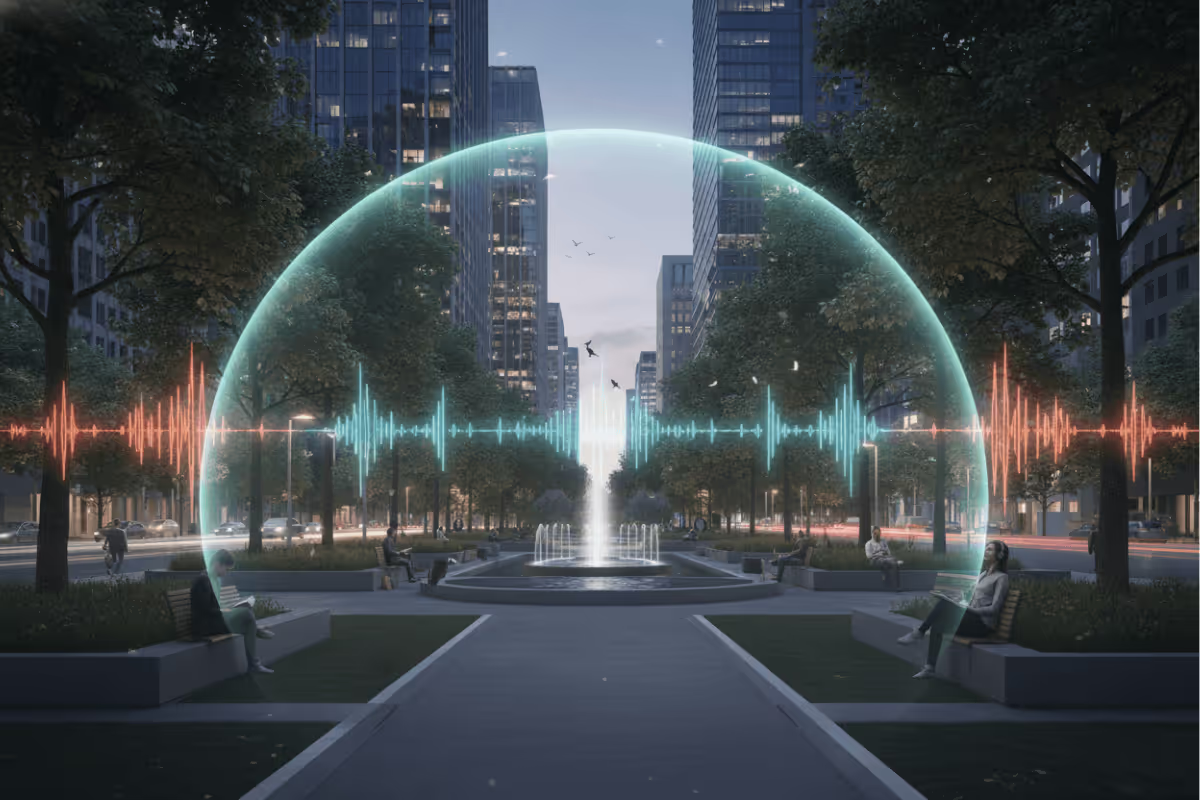
Akoesta's approach to conscious soundscapes
At Akoesta, our philosophy is closely aligned with the soundscape paradigm: acoustics is not a limitation, but an opportunity to enhance both the beauty and functionality of your design.
We approach each project with the awareness that each space has its own unique acoustic identity. Whether it's a Bureau, Shoal, health care facility whether public space, our job is to help you develop customized solutions that serve both the programmatic function and the aesthetic vision.
A partnership approach
In addition to delivering products, we also work with you throughout the design process, from the initial consultation to installation and post-commissioning evaluation.
The approach from our team offers:
- Custom Acoustic Assessments that analyse your specific space and requirements.
- Expert consulting about material selection and spatial strategies that match your design intent.
- On mate solutions made that seamlessly match your architectural vision.
- Photorealistic previews, so that you can visualize the acoustic intervention before installation.
- Professional installation by experienced technicians.
- Measurements after installation to monitor performance and optimize results.
Our materials as design tools
Our broad assortment high-quality acoustic materials ensure that you never have to choose between functionality and beauty. We do not present acoustic solutions as limitations, but as design tools that increase your creative possibilities.
From elegant wood panels and innovative textile systems to customizable printed surfaces and sculptural acoustic elements, our solutions enhance your design vision instead of undermining it. We source our materials from leading partners, including Impact Acoustic, Baux, Glimakra, Akuart, Mogu and Slalom, so that we always have access to the latest acoustic innovations.
Conclusion: Designing the complete experience
The evolution from architectural acoustics to soundscape design is more than just a technical shift; it reflects a wider recognition that good architecture should stimulate all senses. Spaces that sound as good as they look create a more comfortable, productive, and memorable environment.
As design professionals, we have the ability and responsibility to shape not only what people see, but how they hear, feel and experience the spaces we create. By understanding the principles of soundscape design and integrating acoustic considerations from the earliest stages of a project, we can create environments that are truly at the service of their users.
Sound is no longer the overlooked child in architecture; it is a fundamental aspect of the spatial experience that deserves as much attention as form, material and light.
FAQs
What is the difference between building acoustics and soundscape design?
Building acoustics focuses on the physical behavior of sound in space, using quantitative measurements and technical management strategies. Soundscape design takes a people-centered approach, looking at how people perceive, experience and respond emotionally to the acoustic environment in context. While acoustics focuses on noise control, soundscape design strives to create harmonious, meaningful sound environments that promote well-being and support spatial function.
When should acoustic considerations be included in a project?
Acoustic considerations should from the earliest conceptual design phases be integrated. Decisions about spatial layout, geometry, choice of materials and program connections all have profound acoustic consequences. By paying early attention to acoustics, more elegant, cost-effective solutions are possible that seamlessly match your design vision. Retrofitting acoustic measures after construction is usually more expensive, disruptive and less effective.
How do I find a balance between aesthetic design and acoustic performance?
The alleged conflict between aesthetics and acoustics often stems from outdated assumptions about acoustic treatments. Modern acoustic materials offer a range of sophisticated design options, including sculptural panels, elegant wood systems, customizable printed surfaces, and invisible integrated solutions. By seeing acoustics as a design tool rather than a limitation, and by collaborating with acoustic specialists at an early stage in the process, you can create spaces where form and acoustic function reinforce each other instead of competing with each other.


Share this:

Related posts
Check out these articles...
.avif)
Irrelevant speech (a risk for your health)


Acoustics: the silent force behind productivity and job satisfaction

Your workplace as a source of inspiration? This is how you do it!
Transform your environment into the best version to work, learn or live in
Know what options are available for your situation in 30 minutes.