Designing for Soundscape: A Practical Guide for Architects and Interior Designers
Soundscape design changes the experience of spaces by consciously shaping acoustic environments. This practical guide covers strategic zoning, choice of materials, spatial interventions and sensory integration, allowing architects and interior designers to create spaces where sound enhances both functionality and atmosphere.

Soundscape design is about more than reducing unwanted noise. It is the process of shaping an acoustic environment around how people use, hear, and experience a space.
For architects and interior designers, this means considering sound alongside light, materials, form, circulation, and visual design. The right acoustic strategy can improve speech clarity, privacy, concentration, comfort, and the overall atmosphere of a space.
This guide explores practical soundscape design strategies, including acoustic zoning, material selection, sound absorption and reflection, spatial planning, biophilic sound, and acoustic measurement.
For a deeper look at the principles behind these strategies, explore our guide to architectural soundscape.

What Is Soundscape Design?
Soundscape design is the intentional planning of the sounds people hear and experience within a space.
Traditional noise control often focuses on reducing unwanted sound. Soundscape design takes a broader approach. It considers which sounds should be reduced, which should remain, and whether new sounds could improve the experience.
For architects and interior designers, this creates three basic questions:
- Which sounds should be reduced?
- Which sounds should be preserved?
- Which sounds could be introduced to improve the space?
The answers depend on the function of the environment. A library requires a very different acoustic experience from a restaurant, classroom, healthcare facility, or collaborative office.
The Acoustic Palette: A Framework for Soundscape Design
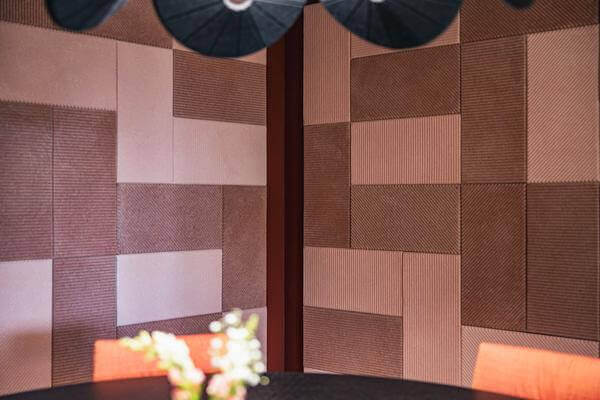
A useful starting point is to think of sound as an acoustic palette. Instead of trying to make every environment quieter, consider how different sounds contribute to the intended experience.
1. Reduce Unwanted Sound
The first step is identifying sounds that interfere with the purpose of the space.
These may include:
- HVAC and mechanical equipment
- Traffic and external noise
- Footsteps and movement
- Conversations from nearby areas
- Excessive reverberation
- Equipment and operational noise
Acoustic absorption, sound isolation, barriers, spatial separation, and careful equipment placement can help control these sources.
The aim is not necessarily complete silence. The goal is an acoustic environment that supports the activity taking place. If excessive echo or reflected sound is the main problem, our guide on how to improve acoustics explains the key steps in more detail.
2. Preserve Useful and Positive Sounds
Not every sound should be absorbed.
Human voices, natural sounds, music, and other meaningful sounds can contribute positively to a space.
In a meeting room or lecture hall, for example, controlled reflection can support speech intelligibility. In a restaurant, some background conversation can create social energy.
Good acoustic design maintains useful sounds while preventing them from becoming uncomfortable or distracting.
3. Introduce New Acoustic Elements
Sound can also become an intentional design element.
Depending on the project, designers may introduce:
- Water features
- Natural sounds
- Ambient audio
- Sound masking
- Interactive sound installations
- Biophilic acoustic elements
These additions can help mask unwanted noise, establish atmosphere, or create a distinctive acoustic identity.

Acoustic Zoning and Spatial Planning
Effective soundscape design often begins with the layout.
Acoustic zoning groups activities according to their sound levels and sensitivity to noise.
Activity-Based Acoustic Zoning
Quiet spaces should generally be separated from noisy or highly active areas.
For example:
- Private offices can be separated from collaboration areas.
- Focus zones can be positioned away from meeting rooms.
- Mechanical equipment can be placed away from acoustically sensitive spaces.
- Recording and conference rooms can be protected from external noise sources.
Considering these relationships during the early design stage can reduce the need for more complex acoustic treatments later.
Buffering and Separation
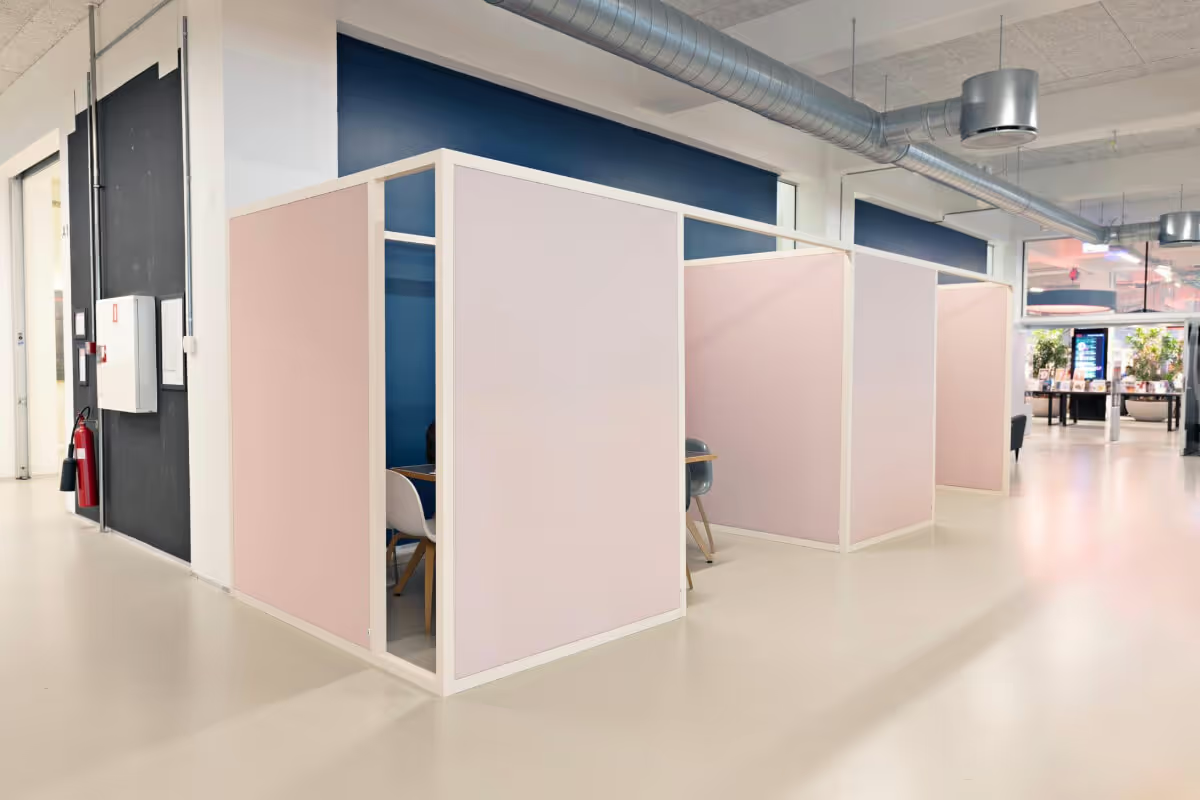
When noisy and quiet activities need to coexist, buffer zones can help.
Useful strategies include:
- Increasing distance between sound sources and sensitive spaces
- Using corridors and storage areas as buffers
- Introducing acoustic screens or partitions
- Using furniture to create smaller acoustic zones
- Positioning structural elements to interrupt sound paths
- Separating noisy equipment from occupied areas
Acoustic partitions can help divide larger environments into functional acoustic zones while maintaining the flexibility of the interior.
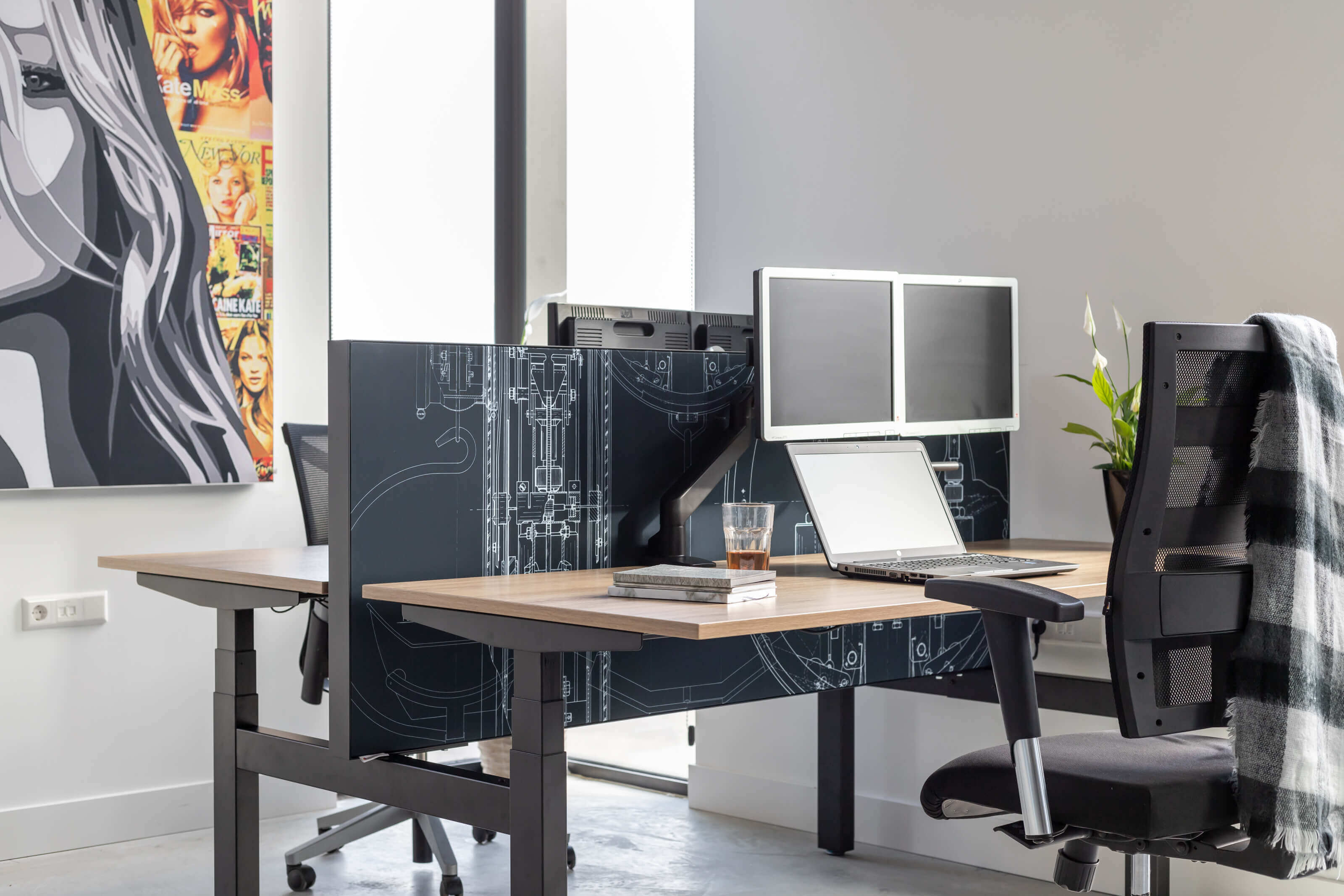
In workplaces, acoustic desk screens can provide additional absorption and separation around individual workstations.
Controlling Sound Transmission
Doors, windows, openings, and partitions influence how sound travels between spaces.
Consider:
- Acoustic seals around doors
- Vestibules between noisy and quiet areas
- Strategic door positioning
- Appropriate partition construction
- Window placement in relation to external noise
- Sealing gaps and penetrations
These details are particularly important where speech privacy or concentration is required.
Choosing Materials for Acoustic Design
Material selection has a major influence on the acoustic character of an interior.
Three important behaviours should be considered: absorption, reflection, and diffusion.
Sound-Absorbing Materials
Sound-absorbing materials help reduce reverberation and excessive background noise.
They are especially useful in:
- Open-plan offices
- Restaurants
- Classrooms
- Healthcare environments
- Meeting rooms
- Public spaces
Common acoustic materials include PET felt, rock wool, wood wool, textiles, and bio-based materials such as mycelium.
Our guide to sound absorption explains how absorptive materials interact with sound and why their performance differs.
Modern acoustic solutions can combine acoustic performance with colour, texture, pattern, and architectural form. This allows acoustic treatment to become part of the interior concept rather than something added after the design is complete.

Sound-Reflecting Materials
Hard surfaces such as glass, concrete, stone, and solid wood tend to reflect sound.
Reflection is not always negative.
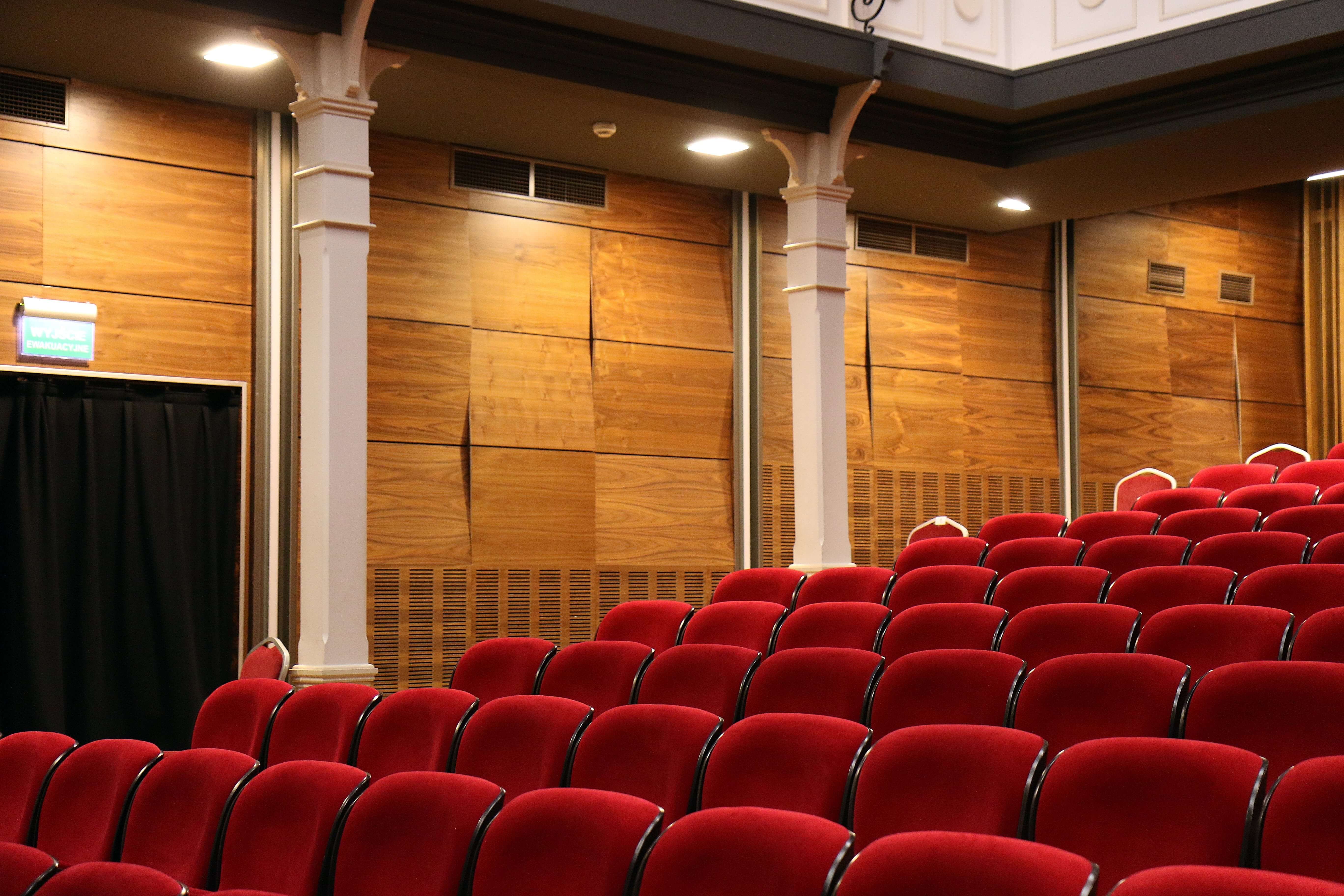
Lecture halls, performance spaces, meeting rooms, and other environments may benefit from carefully controlled reflections because they can support speech or musical clarity.
The goal is balance.
Too much reflection can produce excessive reverberation and poor speech intelligibility. Too much absorption can make a room feel acoustically flat.
Sound Diffusion
Diffusion spreads sound energy in different directions rather than allowing strong reflections to travel directly back toward the listener.
Design strategies may include:
- Textured surfaces
- Curved walls
- Faceted surfaces
- Panels installed at different depths
- Relief patterns
- Irregular architectural forms
Diffusion can help create a more balanced acoustic experience while maintaining some natural energy within the space.
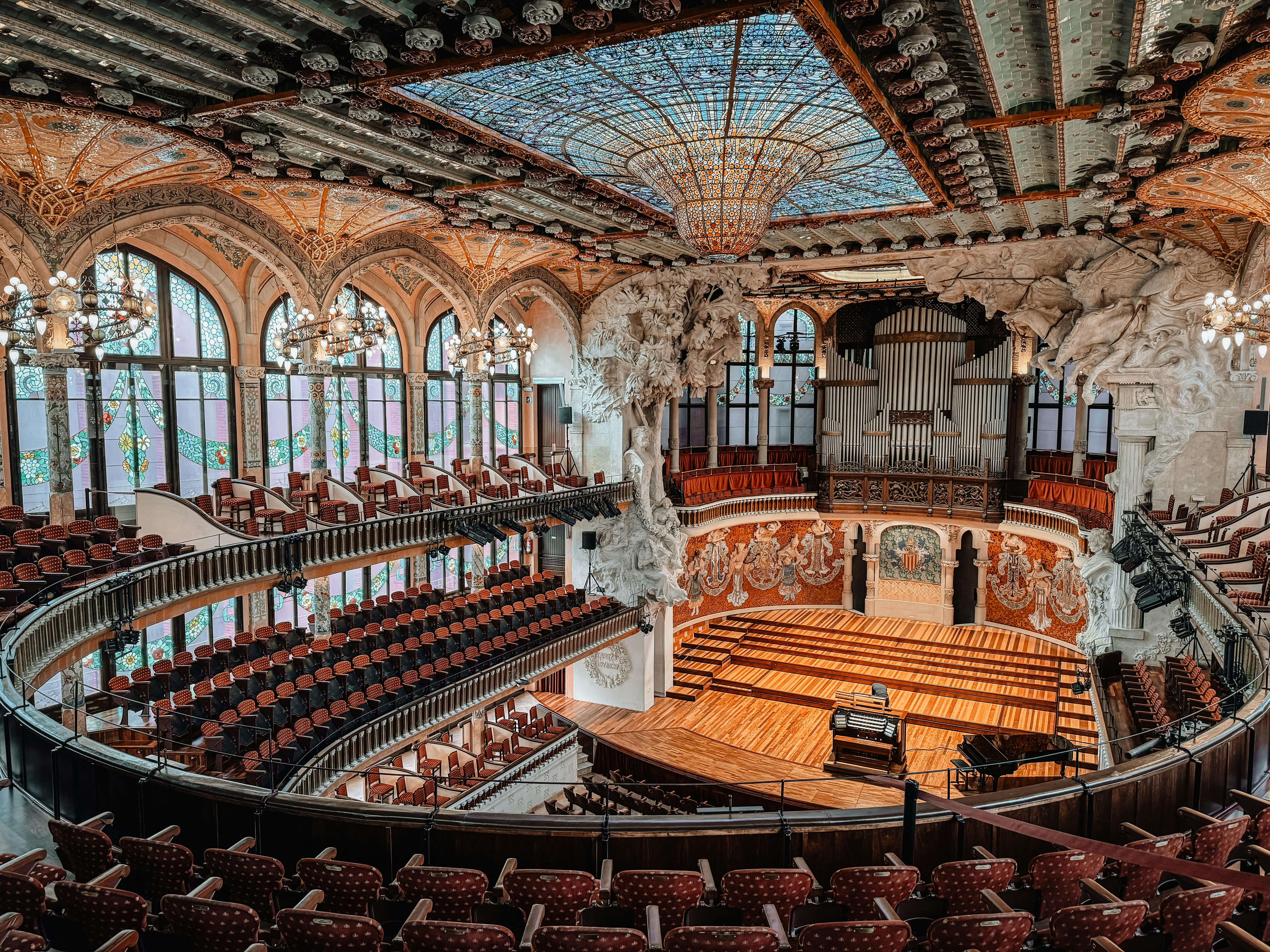
Using Architecture and Geometry to Shape Sound
Acoustic design is not limited to acoustic panels. The architecture itself influences how sound behaves.
Room volume, ceiling height, wall angles, surfaces, and spatial proportions all affect the acoustic environment.
Ceiling Height and Room Volume
Large rooms and high ceilings can create longer reverberation times.
In spaces where speech clarity is important, acoustic ceiling panels, baffles, or acoustic clouds can help control reflections from above.
These elements can also become visual features within the interior rather than purely technical additions.
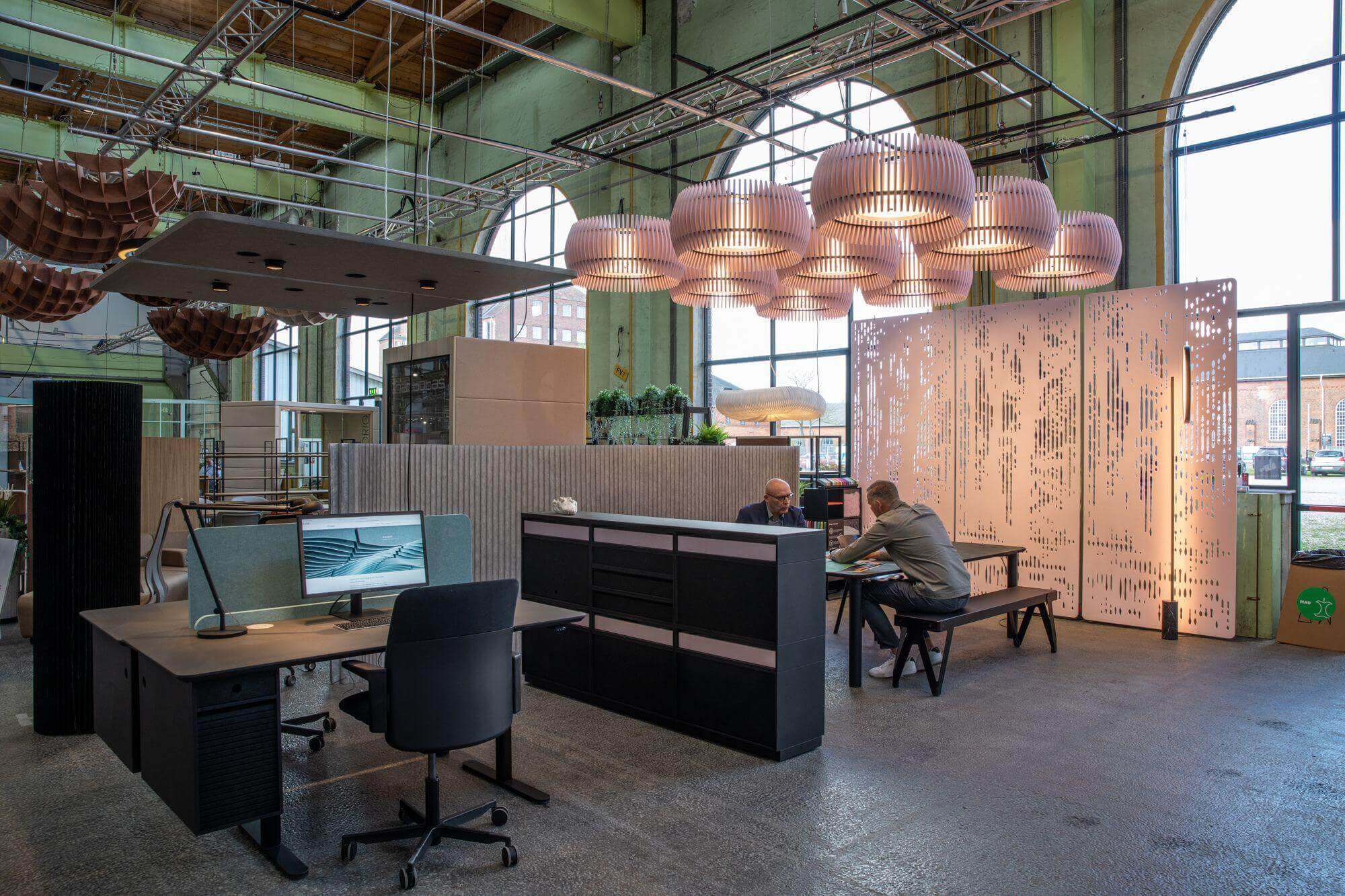
Non-orthogonal design
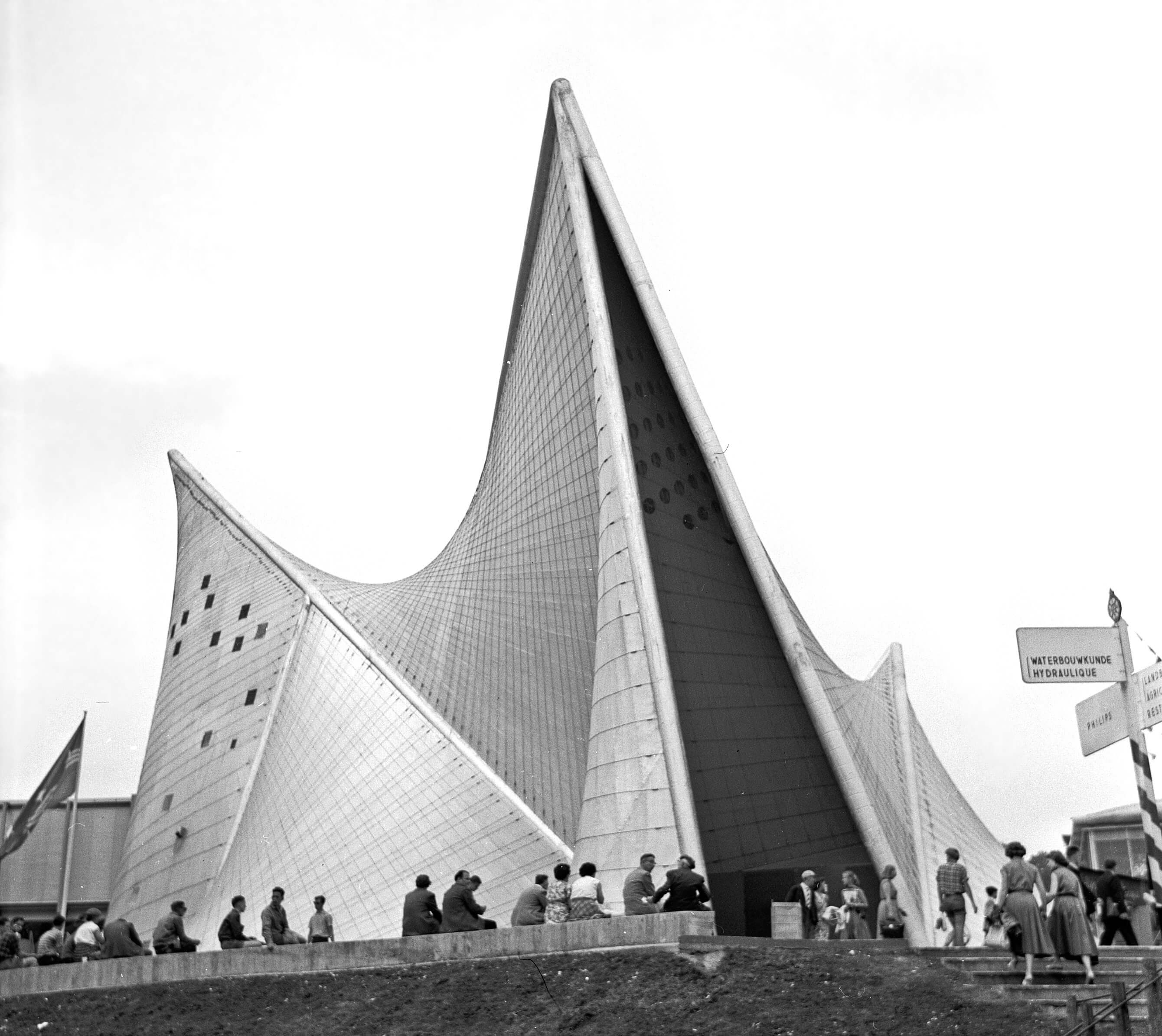
Cause parallel walls in rectangular spaces flutter echoes: rapid repetitions of sound that cloud clarity. Non-orthogonal (non-rectangular) spaces with curves, angles, or controlled surfaces (such as hyperbolic paraboloids) naturally prevent these problems.
Strategies:
- Use sloped walls or flared surfaces.
- Use curved elements to disperse sound instead of concentrating it.
- Break large parallel surfaces by using acoustic treatments or relief.
It Philips Pavilion (1958) famously used hyperbolic paraboloid surfaces, specifically for their acoustic qualities, avoiding the multiple reverb that often occurs in orthogonal spaces. Although few projects require such radical geometry, the principle remains relevant: a thoughtful form can elegantly solve acoustic problems.
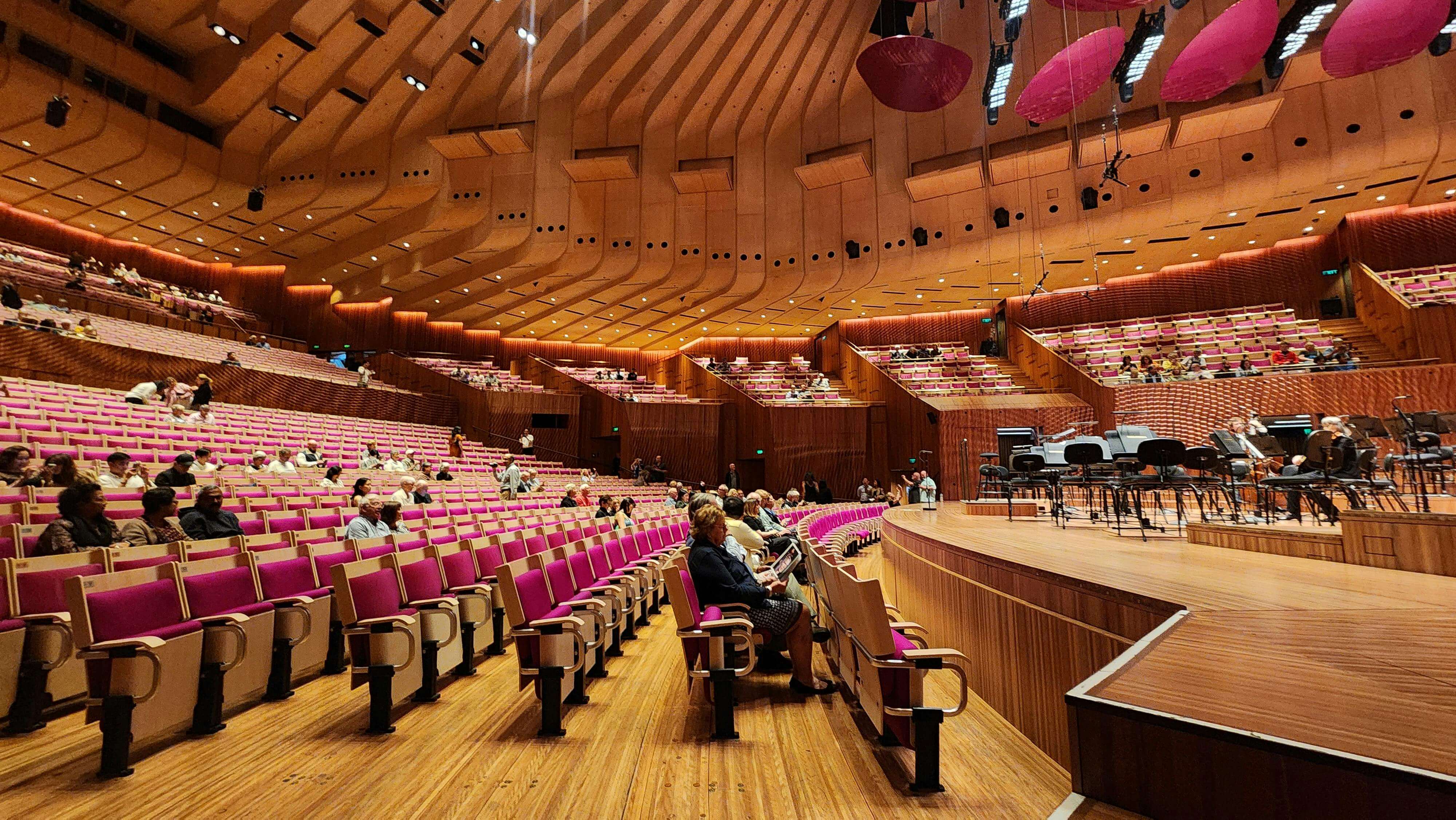
Avoiding Problematic Parallel Surfaces
Large parallel walls can create repeated reflections and flutter echoes.
Designers can reduce these effects through:
- Angled walls
- Curved surfaces
- Acoustic wall treatments
- Irregular geometry
- Surface relief
- Strategic furniture placement
Considering geometry early can solve acoustic problems without relying entirely on additional treatments later.
Adding sound to the environment: biophilic and technological integration
In addition to controlling existing sound, you can actively introduce new acoustic elements that enrich the soundscape and support your design intent.
Water features as acoustic elements
Water is one of the most effective and widely appreciated sources of noise in design. The sound of running water:
- Naturally and pleasantly masks unwanted noise, particularly effective against traffic or mechanical noises.
- Creates a calming, serene atmosphere that reduces stress and promotes relaxation.
- Adds acoustic variation admittedly without being intrusive or attracting attention.
- Connects indoor spaces with nature and supports biophilic design strategies.
From table models to courtyard waterfalls to flowing channels integrated into the floor design, water can be used at any scale. The key is controlling the acoustic character (gently rippling for quiet spaces, flowing more vigorously for more vibrant environments).
Natural Sound Elements
Other options include:
- Rustling vegetation
- Moving grasses
- Trees affected by wind
- Natural material interactions
- Carefully designed outdoor-to-indoor sound connections
The objective should not be to add natural sounds simply as decoration. They should support the function and sensory character of the environment.

Sound Masking and Ambient Sound
In some spaces, adding a controlled level of background sound can improve acoustic comfort.
Sound masking is particularly useful where speech privacy is important.
Open offices are a common example. A carefully controlled background sound can make nearby conversations less noticeable without creating an unnaturally silent environment.
Sound masking should complement good spatial planning and acoustic treatment rather than replace them.
Interactive and Integrated Sound Systems
Technology gives architects and designers additional ways to shape acoustic environments.
Speakers can be integrated into ceilings, walls, furniture, or architectural elements to provide:
- Ambient sound
- Background music
- Sound masking
- Natural soundscapes
- Location-specific audio
Interactive sound installations can respond to movement, touch, or environmental conditions.
These systems are particularly relevant to museums, hospitality environments, exhibitions, and public spaces, where sound can become part of the visitor experience.
Measuring and Testing Acoustic Performance
Good soundscape design combines human perception with measurable acoustic performance.
Measurements can help designers understand existing problems and evaluate whether proposed solutions are working.
Professional acoustic measurements can provide useful data before treatment and help verify acoustic performance after installation.
ISO 12913 and Soundscape Assessment
The ISO 12913 series provides a framework for understanding and assessing soundscapes.
Unlike approaches based only on sound levels, soundscape assessment also considers how people perceive an acoustic environment within its context.
This is important because two spaces with similar measured sound levels can still produce very different experiences.
Acoustic Simulation
Acoustic modelling tools can predict how sound may behave before construction.
Software such as ODEON and EASE can help acoustic specialists evaluate:
- Reverberation
- Reflections
- Material choices
- Room geometry
- Sound distribution
This allows acoustic decisions to be tested earlier in the design process.
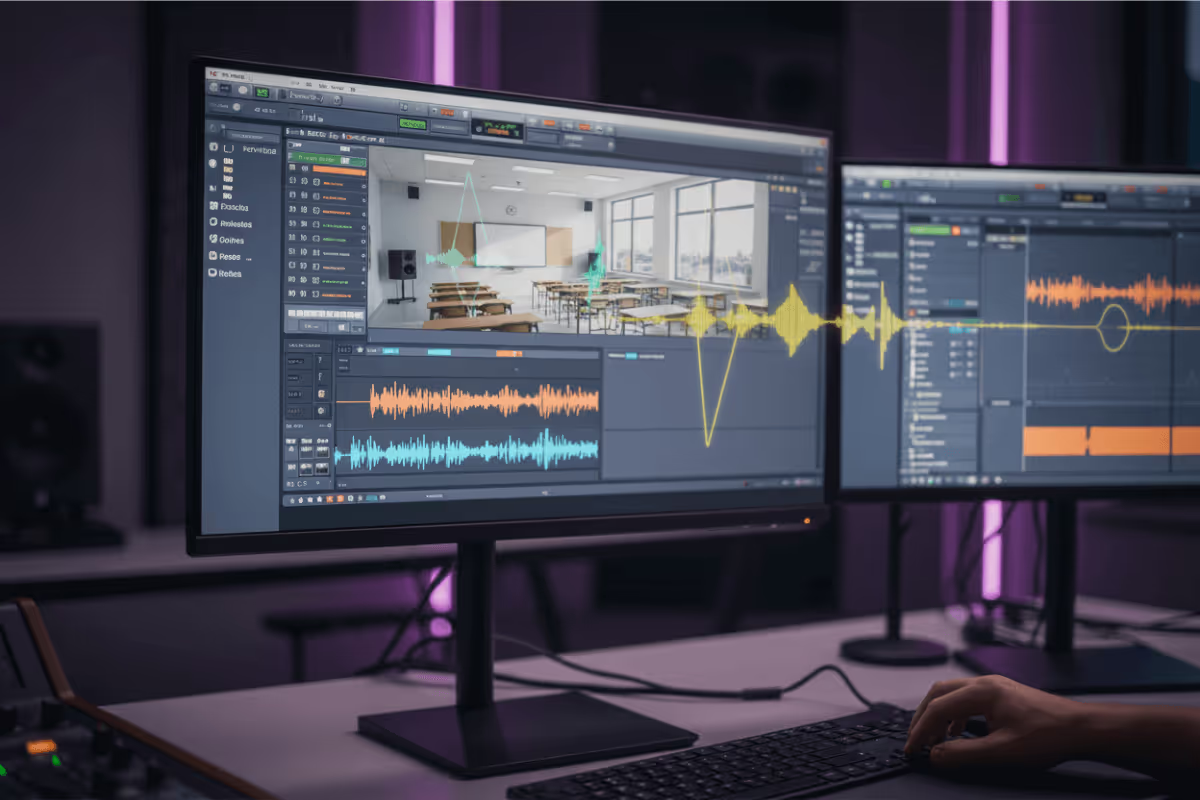
Auralization and 3D Visualisation
Auralization allows designers and clients to hear a simulation of a proposed acoustic environment.
Visualisation can also help project teams understand how acoustic treatments will fit within the architecture. Akoesta's 3D preview can help visualise proposed acoustic elements before installation.
Soundscape Design for Different Environments
There is no single acoustic strategy that works for every project.
The correct approach depends on how people use the space.
Open Offices
Open workplaces need to balance communication, collaboration, concentration, and speech privacy.
Useful strategies include:
- Acoustic zoning
- Ceiling baffles and acoustic clouds
- Desk dividers
- Acoustic screens
- Sound-absorbing wall treatments
- Room-in-room solutions
- Sound masking
Effective workplace acoustics usually combine several of these measures rather than relying on one acoustic product.

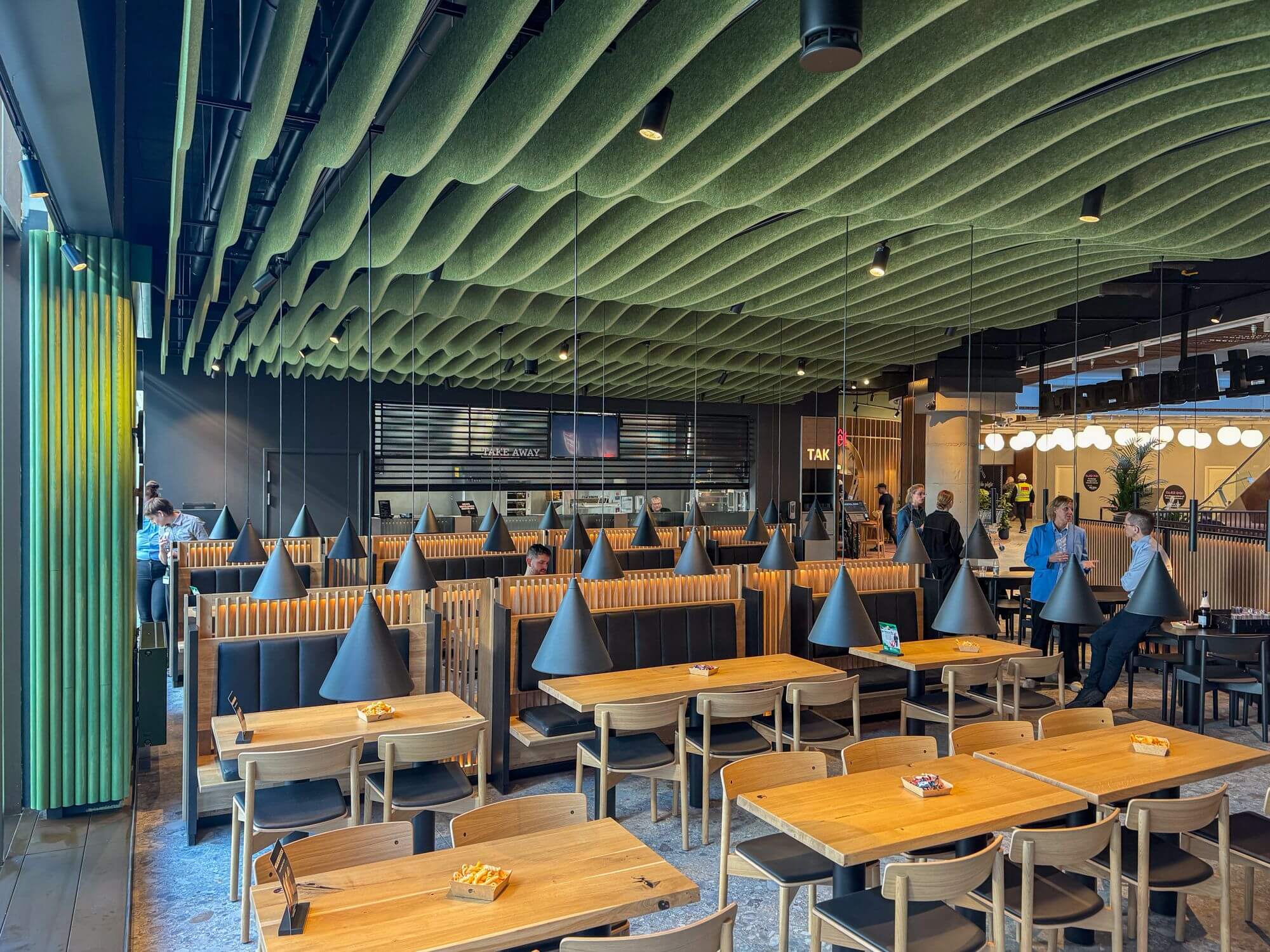
Restaurants and Hospitality
A restaurant should feel lively without becoming uncomfortably loud.
Designers can combine:
- Selective ceiling absorption
- Acoustic wall panels
- Upholstered furniture
- Hanging acoustic elements
- Reflective surfaces
- Acoustic lighting
The objective is controlled acoustic energy rather than silence.
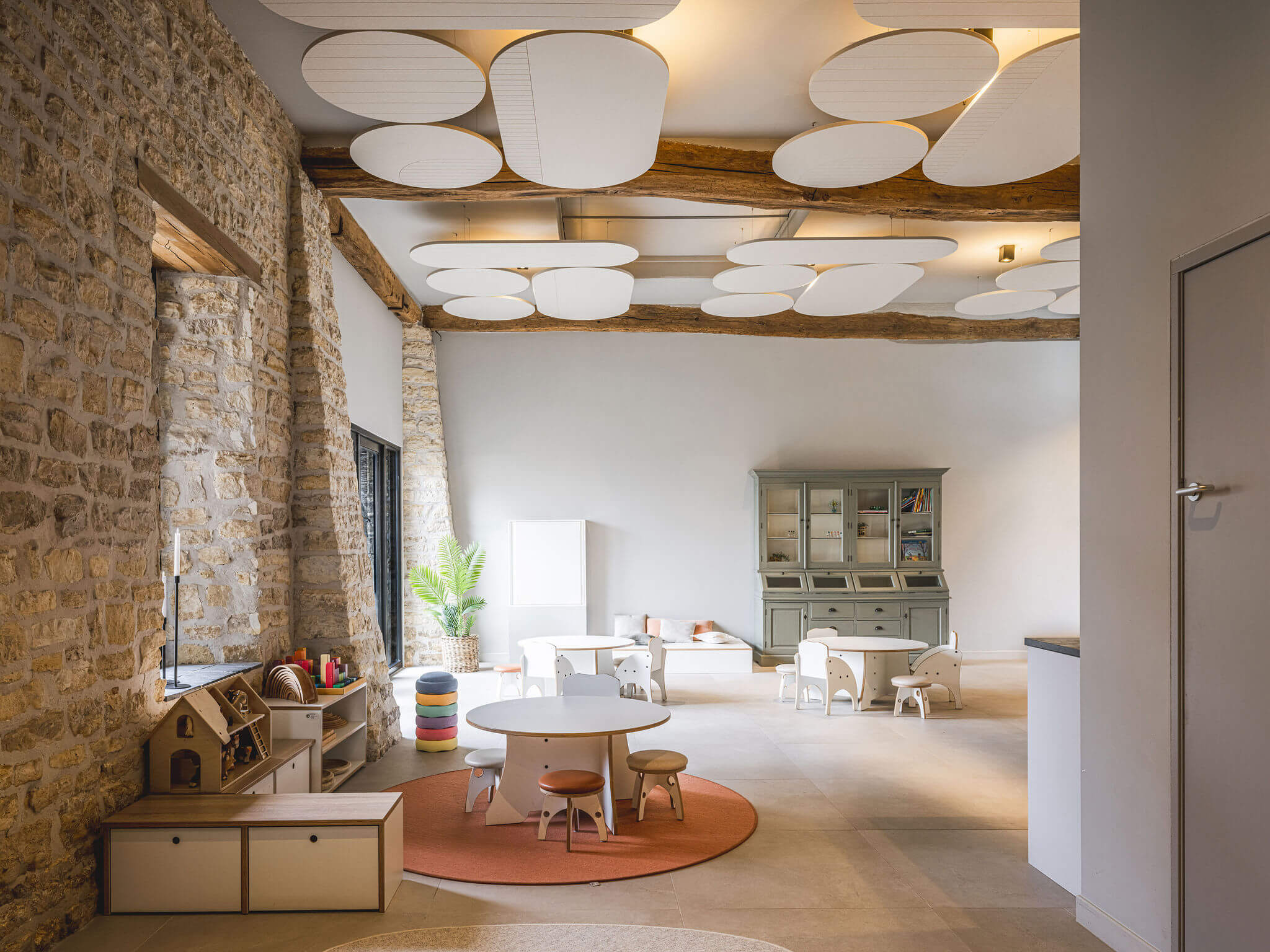
Schools and Learning Environments
Speech intelligibility is particularly important in classrooms.
Long reverberation times and high background noise can make it harder to understand speech and maintain concentration.
Useful solutions include:
- Acoustic ceiling treatments
- Wall absorbers
- Acoustic furniture
- Movable screens
- Strategic zoning
- Careful separation of collaborative and quiet areas
Different educational environments may require different strategies. A classroom, library, cafeteria, and auditorium do not have the same acoustic requirements.
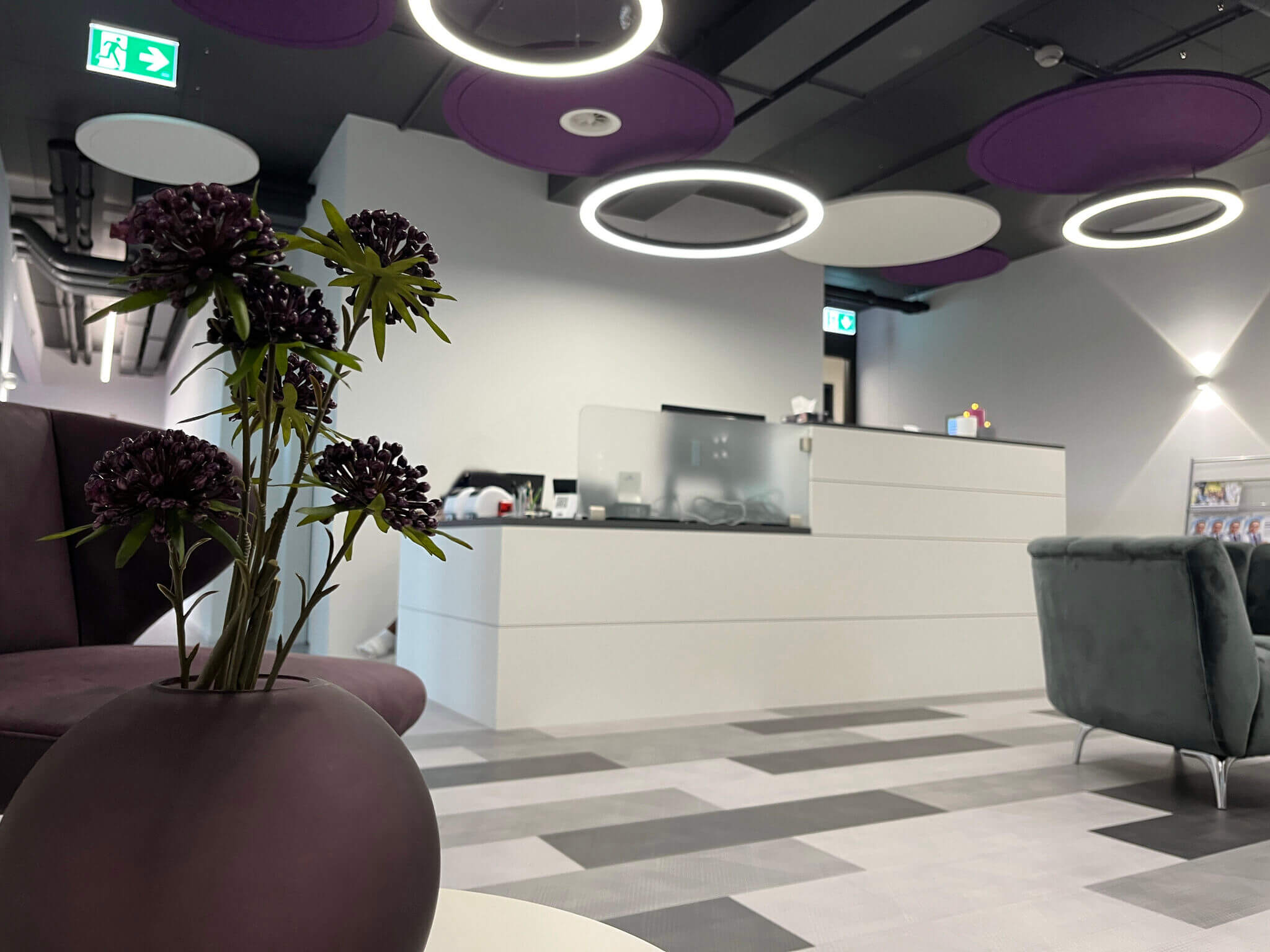
Healthcare Environments
Healthcare environments require careful acoustic planning because rest, communication, privacy, and concentration may all be important within the same facility.
Strategies may include:
- Sound-absorbing ceiling systems
- Acoustic wall treatments
- Better sound isolation between rooms
- Quiet waiting areas
- Careful equipment placement
- Acoustic treatments in staff areas
- Natural or calming sound elements where appropriate
Acoustic solutions for healthcare environments should also take hygiene, safety, maintenance, and the intended use of each space into account.
When Should Soundscape Design Begin?
Acoustics should ideally be considered during the early design stages.
Decisions about room layout, ceiling height, circulation, materials, mechanical equipment, and spatial relationships can all affect the final acoustic environment.
Early acoustic planning allows architects, interior designers, and acoustic specialists to integrate solutions into the architecture rather than trying to correct problems after construction.
Where standard products do not suit the architecture or interior concept, custom acoustic solutions can provide more flexibility in dimensions, materials, colours, and visual integration.
From Practical Soundscape Design to Architectural Soundscape
This guide focuses on the practical side of soundscape design: how zoning, materials, geometry, acoustic treatments, and sensory elements can be used to shape the experience of a space.
For a deeper understanding of the theory behind these strategies, read our guide to architectural soundscape. It explores the transition from traditional building acoustics to people-centred acoustic environments, auditory perception, acoustic atmospheres, and sensory design.
Together, these approaches connect measurable acoustic performance with the way people actually experience architecture.
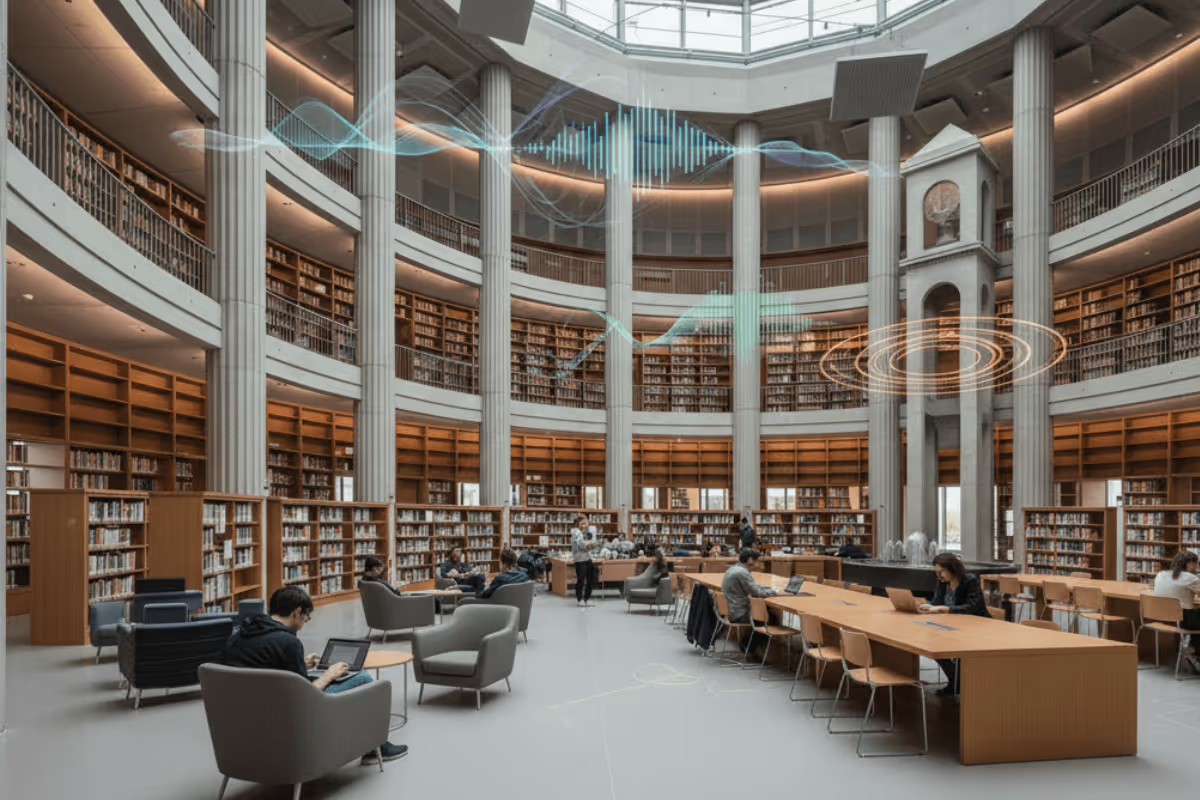
Akoesta's Approach to Soundscape Design
At Akoesta, we see acoustics as part of the design process rather than a limitation that needs to be hidden.
Through our approach, we work with architects, interior designers, and project teams to develop acoustic solutions that support both the function and visual identity of a space.
Depending on the project, this can include:
- Acoustic assessment
- Advice on materials and placement
- Custom acoustic solutions
- 3D visualisation
- Professional installation
- Acoustic measurements
Our range includes acoustic materials and systems from specialist brands such as Impact Acoustic, Baux, Glimäkra, Akuart, Mogu, and Slalom.
This gives designers access to different materials, colours, forms, textures, and acoustic performance levels for a wide range of environments.
Conclusion: Design Spaces That Sound as Good as They Look
Sound should not be an afterthought.
By considering acoustic zoning, materials, geometry, sound absorption, reflection, masking, and sensory elements early in the project, architects and interior designers can create spaces that support both function and human experience.
The aim of soundscape design is not simply to make spaces quieter. It is to create an acoustic environment that feels appropriate for how the space is used.
A workplace should support focus and communication. A restaurant should feel energetic without becoming overwhelming. A classroom should support clear speech. A healthcare environment should encourage comfort, privacy, and rest.
When sound becomes part of the design process from the beginning, acoustics can contribute to the identity, usability, and atmosphere of the entire space.
Frequently Asked Questions About Soundscape Design
What is soundscape design?
Soundscape design is the process of intentionally shaping the acoustic environment of a space. It considers which sounds should be reduced, preserved, or introduced to support the function and experience of the environment.
How is soundscape design different from noise control?
Noise control primarily focuses on reducing unwanted sound. Soundscape design takes a broader approach by considering the complete acoustic experience, including useful, positive, and intentionally introduced sounds.
Why is soundscape design important for architects?
Architecture influences how sound travels, reflects, and is absorbed. Considering acoustics during the design stage allows architects to use layout, geometry, materials, and acoustic treatments more effectively.
When should acoustic design begin?
Acoustic planning should ideally begin during the concept and spatial planning stages. Early decisions about layout, materials, ceiling heights, partitions, and mechanical systems can significantly influence the final acoustic performance.
Which materials are used in soundscape design?
Common materials include PET felt, rock wool, wood wool, textiles, acoustic plaster, perforated wood, and bio-based materials such as mycelium. The correct material depends on the required level of absorption, reflection, diffusion, aesthetics, fire performance, and application.
Can acoustic solutions be part of the interior design?
Yes. Modern acoustic products are available in many colours, materials, shapes, textures, and custom finishes. Wall panels, ceiling elements, partitions, lighting, and acoustic furniture can become intentional parts of the interior design rather than hidden technical treatments.



Share this:

Related posts
Check out these articles...

Artificial rest

The influence of good acoustics on the brand and customer experience

Acoustics: the silent force behind productivity and job satisfaction
Transform your environment into the best version to work, learn or live in
Know what options are available for your situation in 30 minutes.